
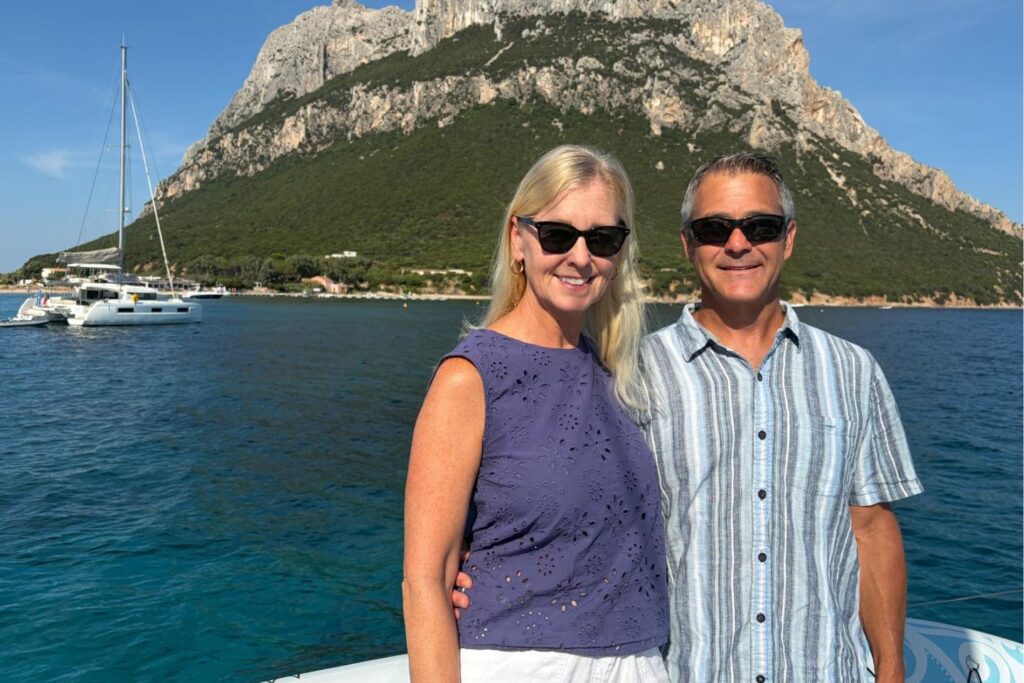
After a year of full-time land travel, Dan and Paula Gabier realized they missed something they had found years earlier while living aboard a sailboat: community.
They first tried full-time sailing 10 years ago after Dan retired from the U.S. Navy, sailing from North Carolina to Australia with their two school-aged children over the course of 13 months. After returning to the United States for work, school, and family priorities, they resumed long-term travel when their youngest child started university.
Following that year of land-based travel, the couple bought their current catamaran in the U.K. and returned to living aboard. Now they spend most of the year on their boat in the Mediterranean.
In this interview, Dan and Paula share how they make full-time cruising work, including boat expenses, overseas logistics, daily routines, and the cruiser community that drew them back to life on the water.
Note: Dan and Paula each answered selected questions for this interview. Their names appear before each response so you can read their individual perspectives.
What led you back to full-time cruising?
Dan:
I’ve had the cruising bug for most of my life. I was first introduced to the lifestyle by my father and kept the dream alive in my mind for years.
After our first round of cruising with our kids, I was left wanting more, but schooling and work compelled us to sell the boat and return to the States.
The next challenge was making sure our kids’ college education was funded. Through a combination of the post-9/11 GI bill and 529 savings, we crossed that hurdle.
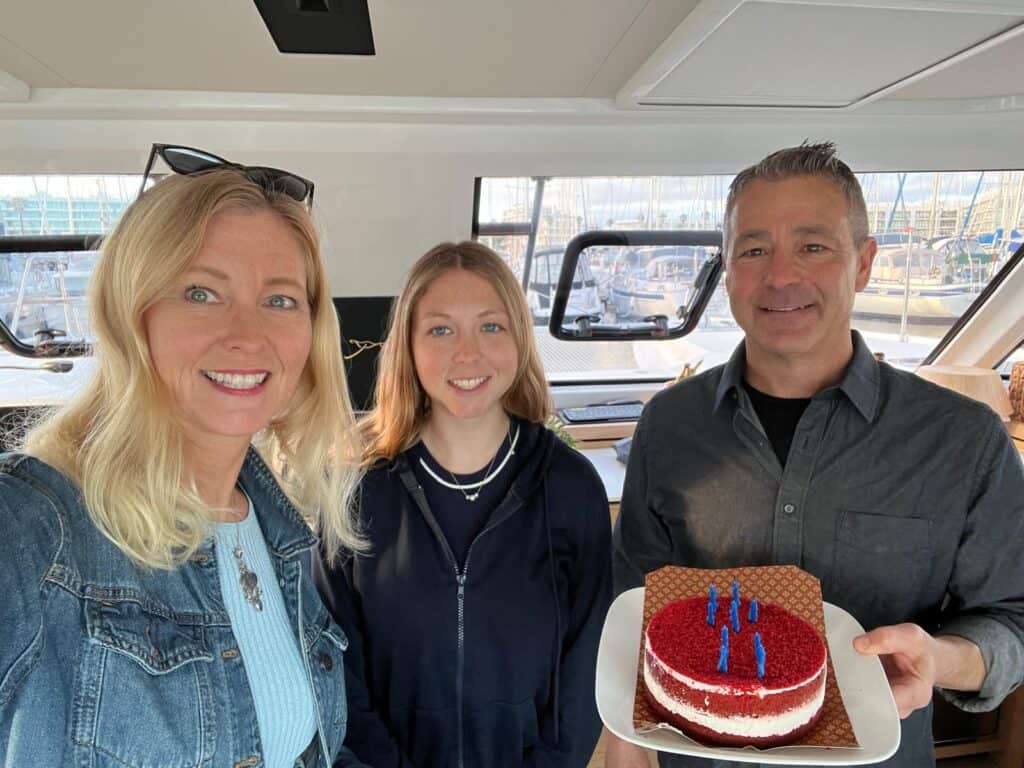
Retiring from the military with all the great benefits that it afforded was the key to our ability to stop work early. For years, while both Paula and I were working, we saved as hard as we could, living in smaller houses, driving older cars, and having fewer toys than we could’ve had.
For about a year before we bought our current boat, we tried slow travel on land, staying at Airbnbs, hotels, and other vacation properties. But we grew weary of living in what various property owners considered adequate.
Living aboard a cruising boat with all our own pots, pans, beds, and pillows seemed like the perfect way to slow travel through Europe, off the beaten track.
What appealed to you about returning to life on a boat?
Paula:
The first time we went cruising, we found a lot of community with the other sailors. Cruisers in general are very welcoming, and it’s an environment where you can dinghy* or paddleboard over to another boat at anchor to meet them, or you can stop at their marina slip to say hello.
(*a dinghy is a small, motorized, rigid inflatable boat.)
In many places, especially over the winter, they have events like happy hours, BBQs, hiking, exercise classes, etc., that give you a chance to socialize with other cruisers from all over the world.
For the year we were traveling on land, I missed the community you have when cruising, or when settled into your primary residence, and you make friends.
For me, sailing is a way to see many new travel destinations while carrying my “house” with me and meeting friendly people along the way. It is much less lonely for me than land travel, and I have access to the household things that make my life more comfortable.
How much does a full-time cruising boat cost?
Dan:
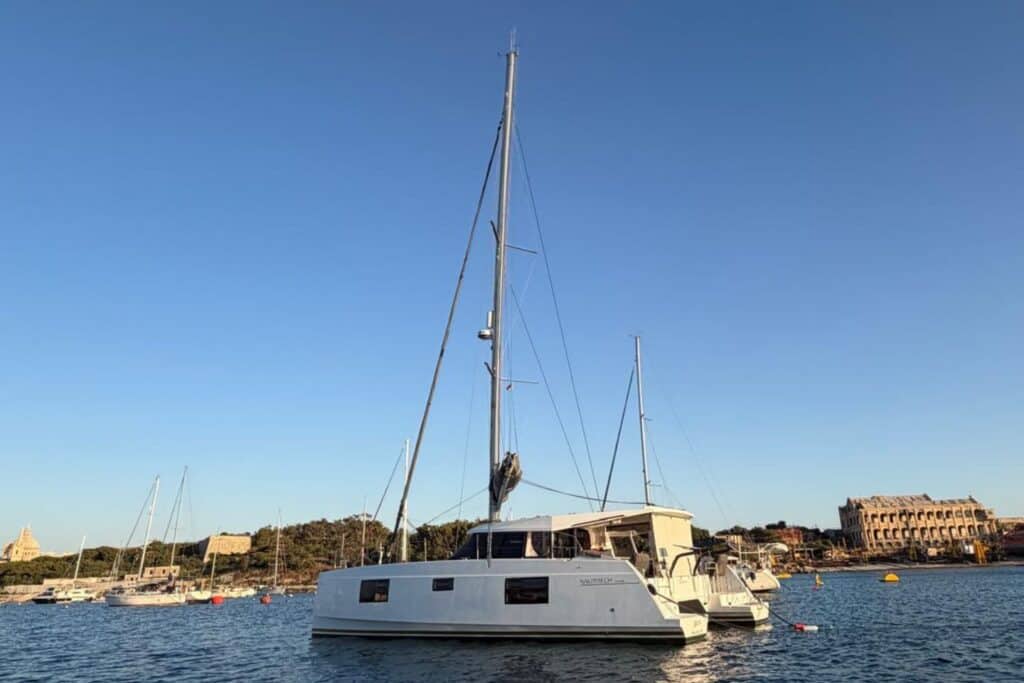
We have seen cruisers on modest, older monohulls that can cost less than $100K. Catamarans range from $200K or even less for smaller, older, production boats up to several million for high-tech, larger, performance-oriented cats. You could probably purchase a fairly well-equipped, older, 12-meter catamaran for about $250K.
Newer, but smaller production catamarans like ours range from $400K to $600K.
What are the biggest ongoing expenses?
Dan:
The costs associated with owning a sailboat/catamaran include the yearly insurance, mooring and marina costs, maintenance, bottom cleaning, fuel, and additional parts.
Insuring the boat is a major expense, costing about 1-5% of the boat value per year! The process for getting the boat insured can range from challenging to impossible, depending on your experience, qualifications, and cruising grounds.
Every year or two, most boat owners haul their boat to clean the hull thoroughly, scrape and repaint the antifouling, and perform the necessary below-waterline maintenance.
We have coppercoat on our hull, so usually a pressure wash is enough for us to clean the bottom, but generally speaking, hauling a boat, pressure washing it, and a few days on the hard will cost a few thousand dollars. If we do not plan to haul our boat, we can hire scuba divers to clean the bottom when she has growth, and that costs about $300 each time.
Spending time in Europe, we also need to consider travel costs back to the U.S. or to other destinations in the off-season. In our case, we have one young adult child who has just “launched” and one who is still in college, so there are expenses there as well.
How do marina prices affect your budget?
Dan:
The key to cruising anywhere in the world for less is to avoid marinas during the high season. In the Mediterranean, marinas are often exorbitantly priced — anywhere from €250-€500 per night — but anchoring out is usually free!
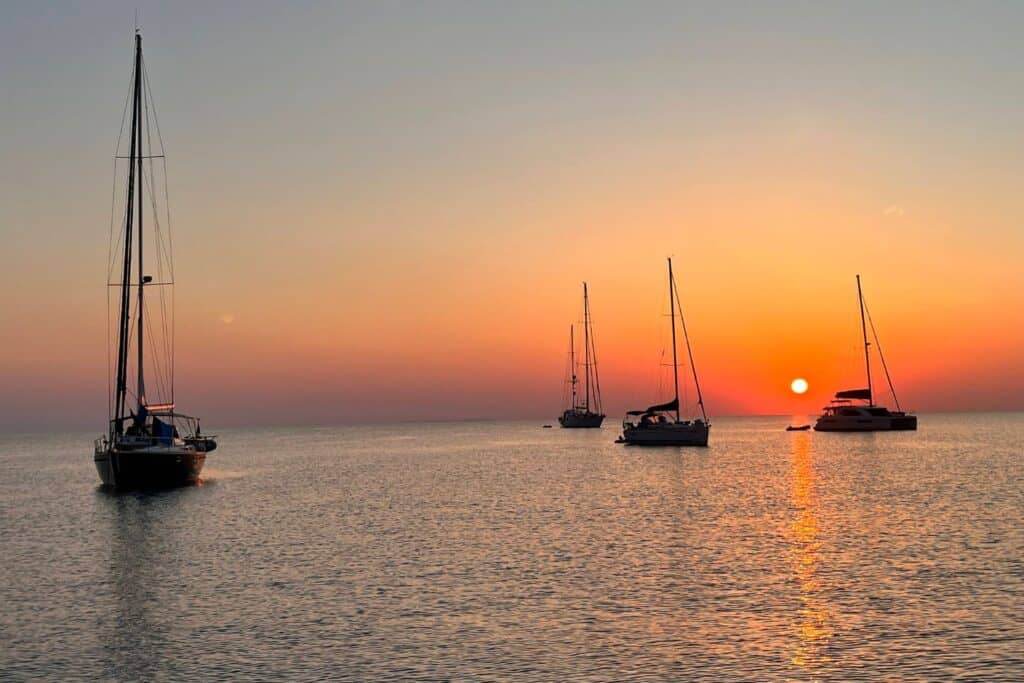
In the off-season, marinas are generally unavoidable because of the winter weather and potential storms in the Mediterranean, so it’s important to get a long-term contract to bring the prices down. In the Med, we’ve been quoted anywhere from $3,000 – $8,000 for a wintering in-water berth for 6-7 months.
Prices are slightly less expensive if you decide to haul your boat out for the winter and keep it “on the hard,” but then you generally cannot, or would not want to, live on your boat during that time.
Prices are usually 50-100% more expensive for catamarans at a marina compared to monohulls, because a catamaran is much wider.
How do you keep the lifestyle financially manageable?
Paula:
Many people are able to live the cruising lifestyle with less than they would spend living in a house or condo in the U.S. We do not currently have a car, we only have a handful of monthly subscriptions (e.g. Amazon Prime, PredictWind, Starlink). Also, cell phone plans overseas are much less expensive than in the U.S.
I recently replaced my iPhone, which I purchased in Europe rather than the U.S. because the European versions still have a physical SIM card. SIM cards are much less expensive than eSIMs in most of the countries we visit.
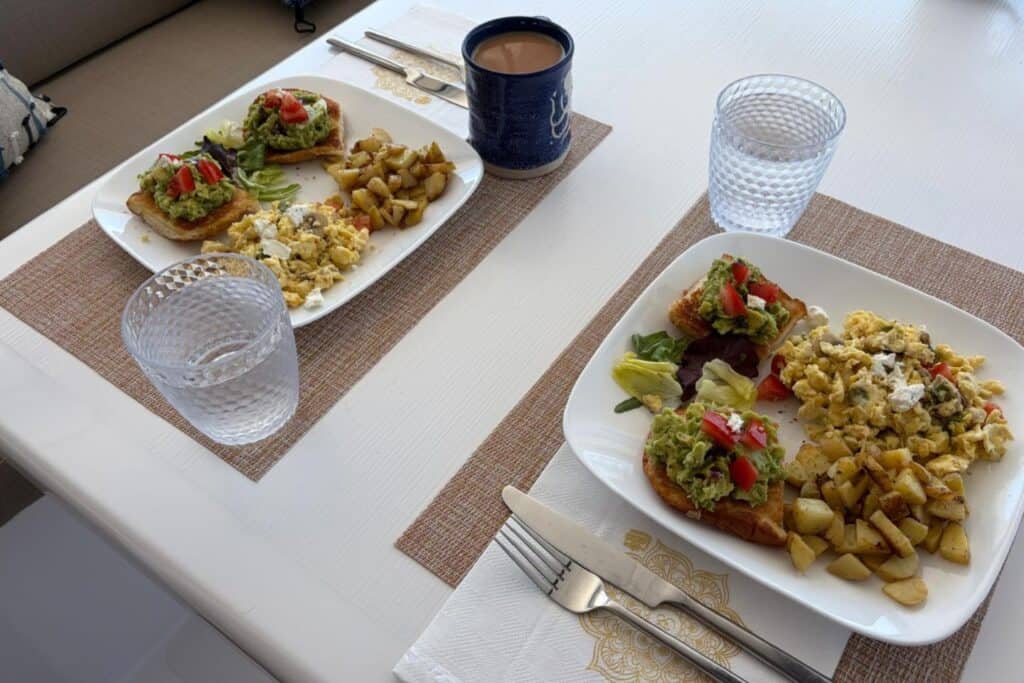
One of the best things about having our boat/home with us is that we can still cook a lot of our meals. While we like to eat out a few times a week, I also really enjoy cooking on the boat. Prices for groceries in Europe are often less expensive than in the U.S (especially fresh produce), so it is economical to make healthy meals on board.
We usually live on anchor during the summer months, which we can do fairly easily with solar panels and a water maker (salt water desalinator), which Dan installed in our boat after we purchased her. Watermakers are expensive (ours was $4,500), but completely worth it when it means you can avoid the high cost of marinas.
Most months, we live off of Dan’s military retirement pension, but occasionally we tap into our savings for major expenses like insurance, or for taking a bucket-list trip in the sailing off-season.
How do you handle banking, cell phones, and mail?
Dan:
Our banking is done via Wise, Revolut, and we also have a Charles Schwab account (they reimburse unlimited ATM fees). Banking has become quite a bit easier in the digital age with secure apps, online deposits, and easy transfers between banks.
A VPN (Virtual Private Network) is often helpful because some institutions (and streaming services) in the U.S. will only allow you to log in by routing through a U.S. server.
Credit cards are widely accepted in Europe, so the key is to obtain a card with no foreign transaction fees and make sure you always choose to charge your purchases in local currency to get the best exchange rate.
Cell phone access is also evolving. We keep our U.S. numbers active by porting them over to Google Voice. This allows us to use fixed U.S. numbers for apps that require two-factor authentication. We also purchase SIM cards in each country we visit, which are usually very cheap and come with a lot of data compared to the U.S.
WhatsApp is very commonly used in much of the world and allows text messages and phone calls to fellow subscribers for free. All that’s needed is WiFi or a cellphone plan with data to access the app. We find that this is the easiest (and free) way to keep in text, phone, and video contact with loved ones back home.
| Related Reading: Phone, SIM Card, and App Tips for Staying Connected Overseas
Snail mail is always a challenge. If we are in a marina, often the office will accept mail and packages for visiting boats. If we are in one place for a while, sometimes post-receiving boxes are available for services like Amazon.
We still own a house in the U.S., and our son attends college nearby, so he lives there with roommates. We use that house for our mailing address (and for some storage), so he opens our mail for us. There are mail services in the U.S. if you do not keep a permanent address.
What does the Schengen Area 90-day limit mean for your sailing plans in the Mediterranean?
Note from Poppin’ Smoke: U.S. passport holders can generally spend up to 90 days in any 180-day period in the Schengen Area of Europe. Dan and Paula’s situation is different because Paula has an Irish passport.
Dan:
Since Paula has an Irish passport, I am allowed to accompany her as the spouse of an EU citizen without the 90-days-in-180-days limit, because we are married.
We do have to carry and be prepared to present a marriage certificate with a special apostille notarization. Also, we must not exceed 90 days in any 180-day period in any one Schengen country without formally registering with the authorities.
Some border guards may not be familiar with these rights, so we carry printouts of EU Directive 2004/38/EC and the Schengen Border Guards Handbook in several languages to help refresh memories.
Also, we try never to separate in immigration lines, because my permission relies on her presence.
How do you handle medical care abroad?
Dan:
Fortunately, our experience overseas has been limited to minor acute issues only.
Generally, services are relatively inexpensive, and we pay out of pocket for them. TRICARE is our backup if we were to have more significant issues, as they reimburse for approved care. We use TRICARE back in the States to get our yearly exams/screenings.
(Note from Poppin’ Smoke: when using TRICARE overseas, in most locations retirees pay out of pocket and submit a claim for reimbursement. Learn how it works here.)
What’s a typical day when you’re underway?
Paula:
During a passage, I am usually seasick, so I spend a lot of time wishing I were back on land!
Because of seasickness, I normally prepare a dinner for us the night before we leave so we don’t have to cook dinner while underway, at least for the first night.
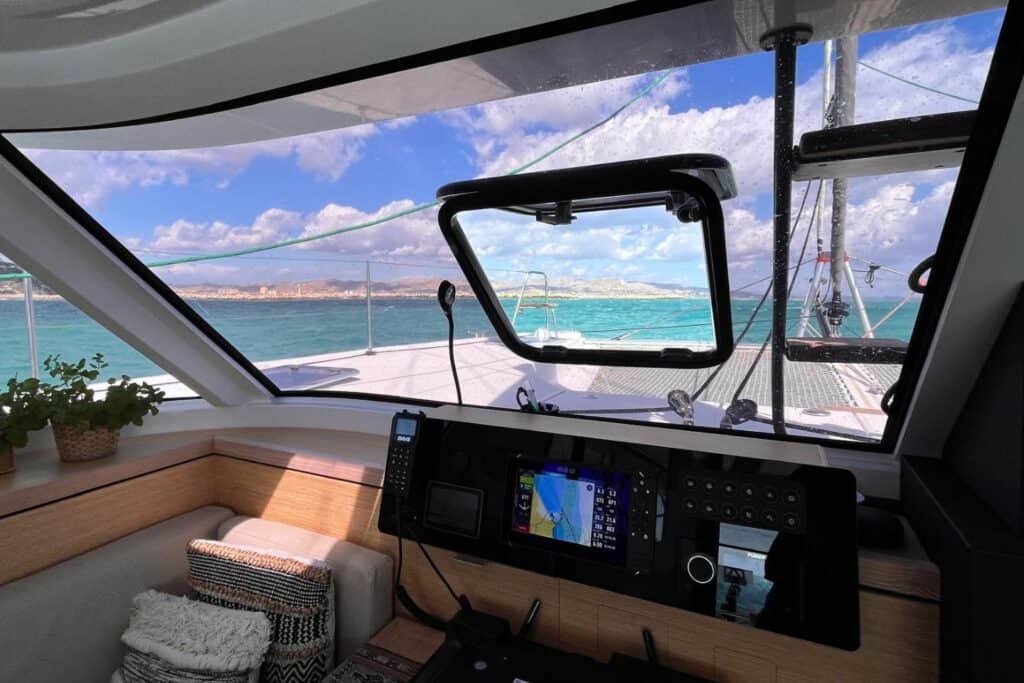
While we’re sailing, someone has to be “on watch” at all times, ensuring we have the right sails up and that they are trimmed correctly for the conditions. Our main goal in any passage is to avoid hitting other boats and ships!
Unfortunately, we can’t just anchor in the middle of the night and go to sleep when we’re offshore (the water is much too deep to anchor) so the boat is constantly moving, and that means one of us needs to be aware of what is going on.
If I don’t feel too sick, I stand watch while Dan sleeps. However, there have been many passages here in the Mediterranean where Dan is basically a solo sailor because I feel so terrible. In those instances, he lets me sleep, and I help him when we need to do a sail change.
Part of this has to do with the choppiness of the Mediterranean compared to ocean conditions. In the past, during our long ocean passages, I was not seasick as often, so I would generally sleep, eat, listen to podcasts, read, look at the sea hoping to spot whales or dolphins, and scan the night sky for satellites and “shooting stars.”
The Mediterranean has been more challenging for me in that regard. Luckily, destinations in Europe aren’t too far between, so the vast majority of our passages don’t last longer than two nights/three days.
What is daily life like at anchor?
Paula:
Our daily routines are generally determined by the type of anchorage we’re in. We tend to find ourselves in two different types of anchorages: (1) a “swimming” anchorage with crystal clear waters and only a small town or cala, or (2) a city anchorage in a harbour within an urban or large town area.
If we’re in a swimming anchorage, in the morning we either work out on the boat, grab a shower, and then have our tea and coffee with a little breakfast, or we delay breakfast and dinghy to land to go for a hike before having a late bite to eat. In the afternoon, we sometimes go for a swim, paddleboard or snorkel, or just read in peace, listening to the sea.
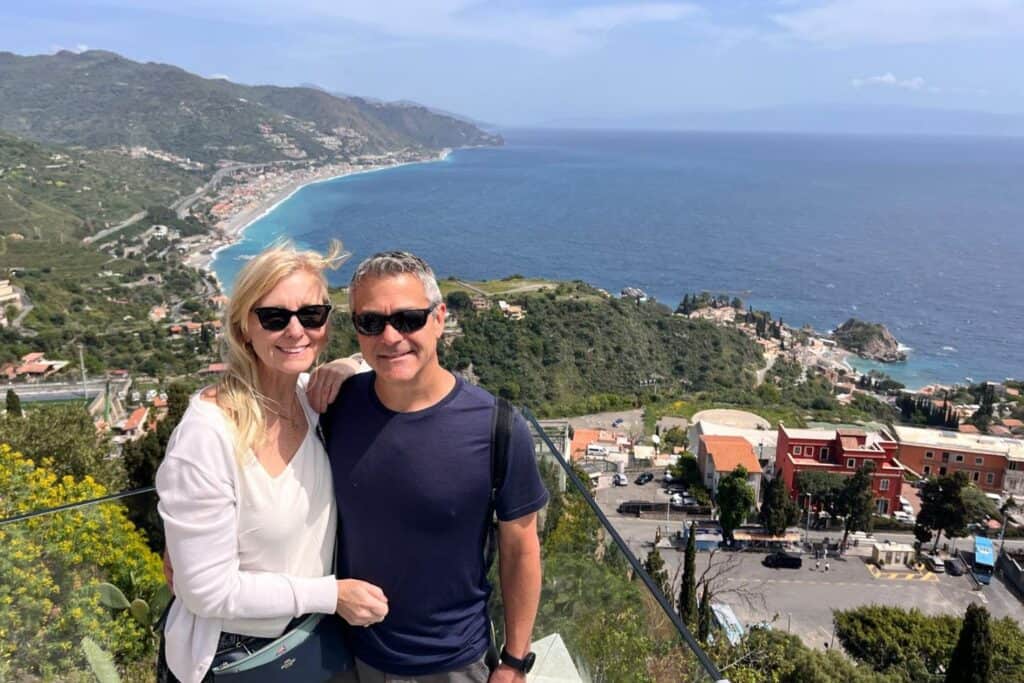
If we’re in a city anchorage, we start the mornings the same way, either working out and having breakfast, or grabbing a quick breakfast and heading into town to explore its history, take a walking tour, go to a museum, etc.
In the evenings, we sometimes take our dinghy to shore and go into town for dinner if there are restaurants nearby, or we cook homemade meals on the boat.
We also do a lot of grocery shopping. Chores are a bit more difficult while cruising. We don’t have a car, so we normally take our foldable shopping cart and walk or take the bus to grocery stores to stock up. It’s enjoyable in all the different countries we visit to figure out what meals we can make, given the ingredients available.
We do not have all the same products and brands that we enjoy back in the States, but we have some products that are much fresher and less expensive, too (e.g., fresh mozzarella in Italy, fresh-baked baguettes everywhere in the EU, lettuce and other produce).
At anchor, sometimes we do our laundry by hand but use our 3.5 kg washing machine to spin it, because we have to be mindful of power and water consumption. If we’ve been at anchor a while, we normally find a laundromat so we can wash larger items. We have the perfect dryer onboard: the safety lines on the bow of our catamaran!
Occasionally, we invite other cruisers over for happy hour in the evening or head to another cruiser’s boat.
How is marina life different?
Paula:
In long-term marinas, there are events going on all the time. This winter in Licata, Sicily, cruisers got together for BBQs every Sunday and happy hours twice a week. (We usually joined happy hours once a week; two seemed excessive.)
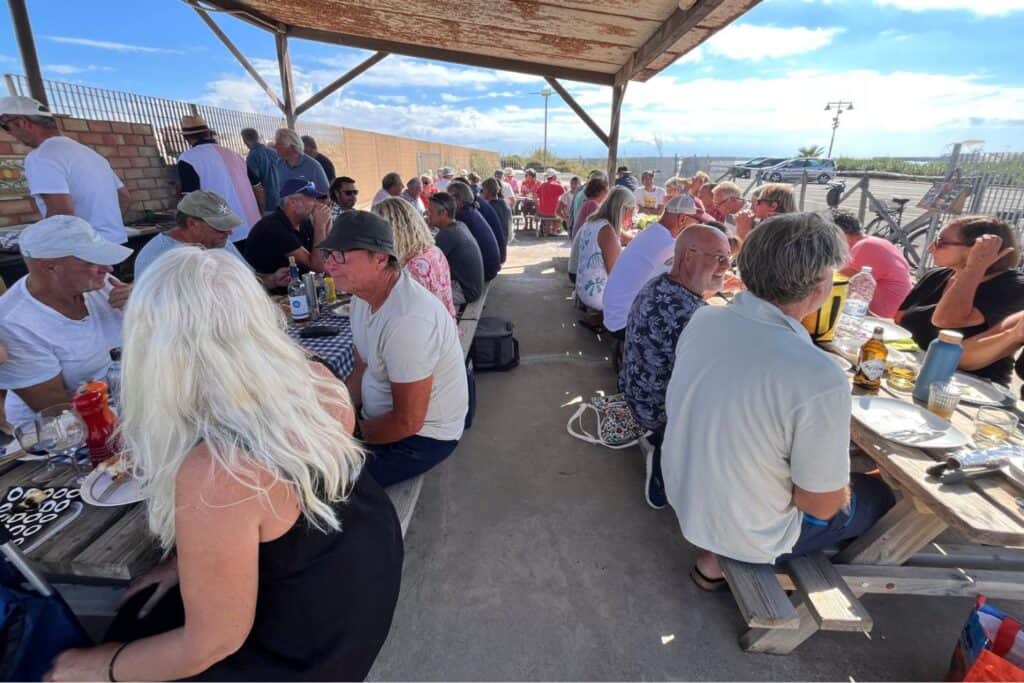
The Licata cruisers also held Pilates and yoga classes, and there were additional events that took place with the local Sicilian community. At some of these cruiser events, there were 30-40 other cruisers there, representing more than 10 countries.
The prior winter in Lagos, Portugal, we had a smaller group of cruisers, but several of us would take a bus to a different long, coastal hike each week, and of course, there were two happy hours per week there, too. (Hint: boat cruisers like happy hours.)
We tend to have more free time at a marina, since chores are a bit easier. Hooked up to water and power, we can use our washing machine, so doing laundry is a breeze. We also don’t have to transport groceries and our trash in a dinghy. And we have, on a few occasions, rented a car for a month at a time, so we can explore the area more widely and easily.
How much time do you spend sailing?
Paula:
I would say we spend a quarter of the time moving during the sailing season, whether from one anchorage to another, or a longer passage of one to three nights to our next destination.
In the off-season, our boat is in one marina and doesn’t move, and we have spent part of the last two winters on our boat.
What are the less glamorous aspects of cruising full time?
Paula:
You can’t flush toilet paper! Seriously, no toilet paper can go into the heads (aka toilets).
Our showers need to be quick “Navy showers,” even though we have a watermaker onboard, because it still takes a lot of energy to desalinate water. Resources are precious.
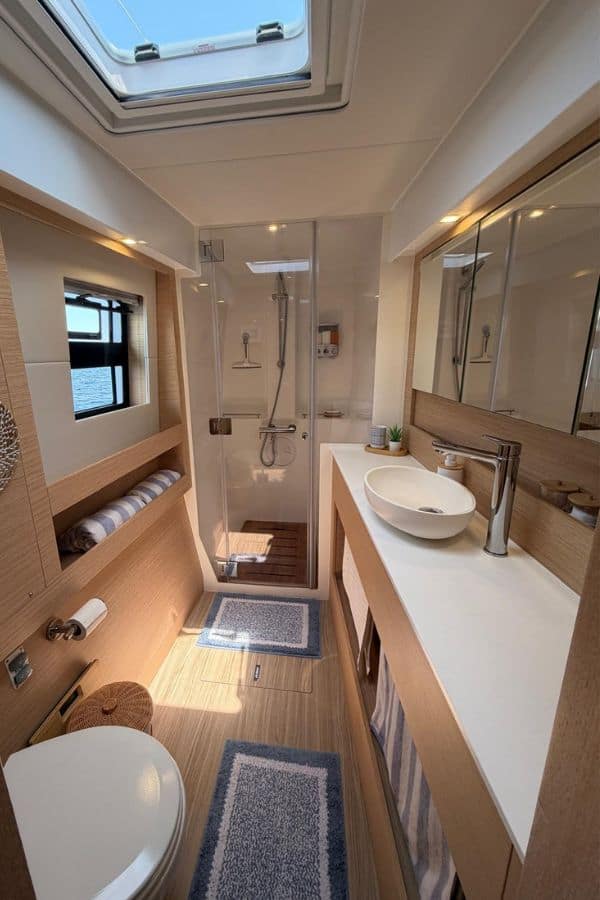
Also, we have to plan in advance to have hot water, either by running the water heater on solar power or a generator, or by running the starboard engine.
As I mentioned previously, all regular household chores are more difficult and take more time living on a boat — even making the beds because you cannot walk around them.
Sailing can be difficult, depending on the weather conditions. If the weather isn’t good, it can be pretty miserable sailing in it. And if we have an emergency — health-wise or with a family members back in the States — during July or August, we will have to pay exorbitant prices to moor our boat.
Oh, and if I haven’t made it clear previously, seasickness is REAL (at least for me)! Luckily, Dan never gets seasick.
How long do you plan to maintain this lifestyle?
Paula:
We heard someone say there are three phases of retirement: go-go, slow-go, and no-go.
We will most likely continue cruising during our “go-go” phase, but we may switch over to a power boat in the future. In a sailboat, you want wind when you make a passage, so that inherently means you’re likely to have larger seas, which means a greater likelihood of seasickness for me.
With a power boat, you wait for a calmer weather window with lighter winds to make a passage, so that usually means a more comfortable passage.
I think we will end up cruising around the Mediterranean for several years. Ultimately, though, Dan and I will decide as a couple when we’re done with this lifestyle and ready for something different.
During the slow-go phase, we may spend half our time in the U.S. and half abroad. We’re trying not to plan that far in advance though, as you never know what will come up.
But eventually, at some point in the future, we will move into a house again, and the first two things I will do are start a garden and adopt a pet!
Interested in another full-time sailing story? Read how one military retiree family lived aboard a sailboat with their two children: Full-Time Sailing as a Family.

Awesome info on life aboard a boat! Hope to see you two again sometime in the future.
Thanks Mike, great to hear you are healing well. Best of luck on your next adventure!
Love this article! Great interview. So many details provided about catamaran life overseas. Like Paula, I get seasick. Thanks for writing this, Stephanie!