
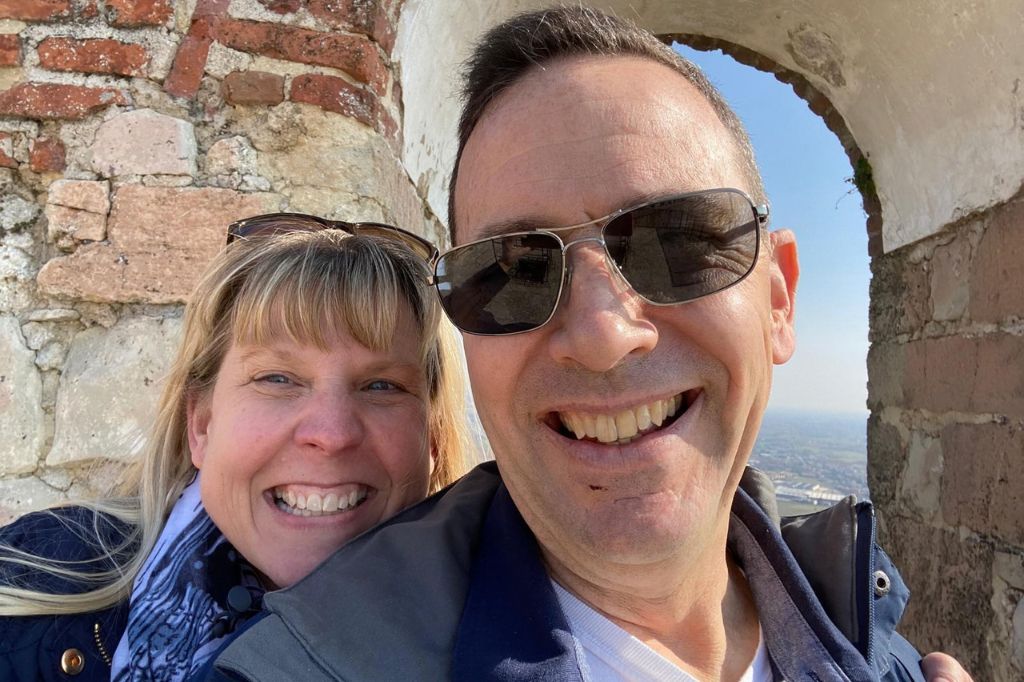
Many veterans dream about living overseas, but figuring out how to land a civilian job on a U.S. military base can feel like a different challenge altogether.
Army retiree Christopher Reed made that transition and now works as a Department of the Army civilian in Vicenza, Italy. He also serves as a hiring manager, reviewing resumes and sitting on hiring panels for civilian positions.
In this interview, Chris shares firsthand advice on finding and applying for overseas government jobs, competing for highly sought-after positions, writing a strong federal resume, understanding the 180-day rule, and weighing GS versus contractor opportunities. He also explains what SOFA status means for benefits, spouse employment, health care, and the realities of living in Italy long term.
When did you retire from the Army, and how did you end up working in Vicenza?
I retired in 2016 after 30 years in the Army. I spent about a year and a half working as an independent contractor in the Washington, DC area, then got a GS position in the DC area in October of 2017.
My wife, Melissa, and I moved to Vicenza, Italy in October 2020 when I got a Department of the Army Civilian position on the staff of the U.S. Army Southern-European Task Force, Africa (SETAF-AF).
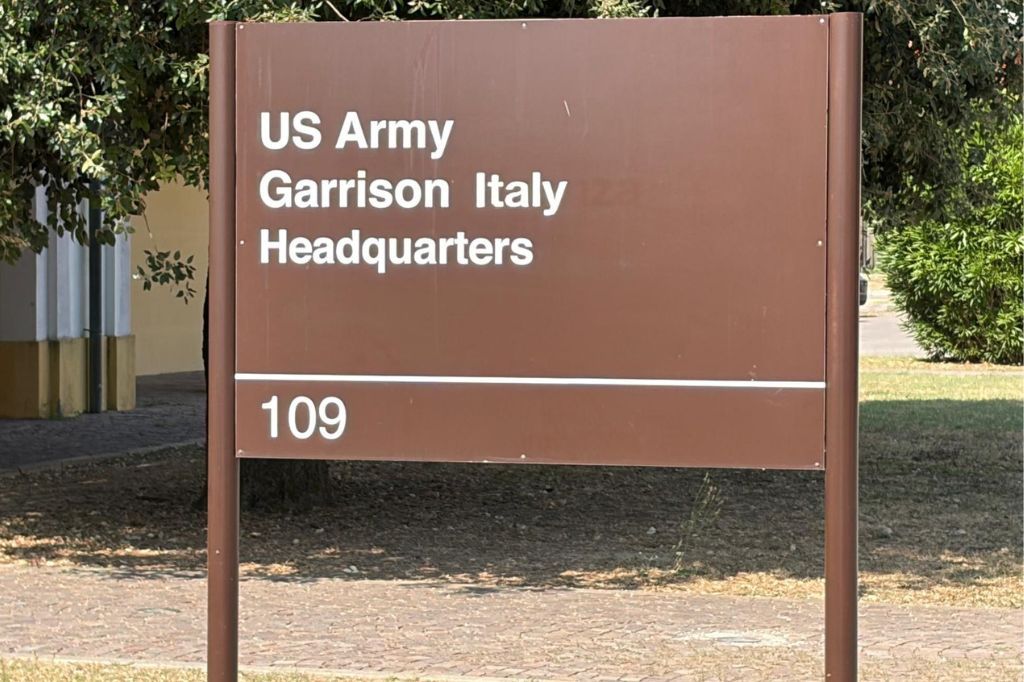
We wanted to live in Europe because we had such a great experience there during one of my final assignments. Though I was an Army brat born in Germany, I never got to return to Europe during my father’s career or my own until after my last tour in Afghanistan.
That’s when I lucked into a one-off job in the U.K. as Senior U.S. Army Liaison Officer to the British Army Headquarters. Talk about winning the lottery! We lived completely off the U.S. grid, embedded with the British Army. We made great friends and fell in love with traveling around Europe.
After retiring from the Army we realized that we wanted to return to Europe since we had enjoyed it so much. We also knew that a U.S. government position overseas was a good way to experience living in a foreign country while still having the safety net provided by the Status of Forces Agreement (SOFA) and having the American military community and post facilities. It also gave us options to set things up for living overseas permanently or semi-permanently once I completely retired.
How competitive are civilian jobs on overseas military bases?
What follows is from my experience and perspective as a hiring manager for my directorate, reviewing MANY resumes and sitting on multiple hiring panels. Even with the changes to some hiring procedures after the 2025 hiring freeze, the process is very much the same as before, and the hiring process is coming back online after being frozen for over a year.
There is a lot of competition for government jobs. Having veterans’ preference is no guarantee you will get hired.
Veteran status gives you some additional avenues for hiring, but about 40% of government employees are veterans, and you only need a 30% disability rating to qualify for disabled veterans’ preference. Being a veteran, even a disabled veteran, does not make you unique among the applicants, and a rating higher than 30% does not give you more of an advantage.
Competition for overseas government positions is even greater. People want to come here! Currently serving GS employees are willing to take a reduction in grade to do so. People who could easily qualify for GS14 and 15 jobs are applying for GS12 and 13 jobs. I had one GS 14 position in my directorate that received 90 applications.
What’s your best advice for finding and applying for an overseas government job?
Obtaining a government position overseas is no different than applying for and obtaining a government job stateside. Establish an account on USAJOBS. Set up your search parameters for the types of jobs and locations you desire, and then start applying for positions. Here are key points to consider:
Given the competition, my main advice is: do not hold out for the one golden job in the perfect location.
I made this mistake at first. I was only going after a small number of jobs in the U.S. and U.K. I was getting nowhere. A friend who was already a GS employee advised me: “Open the aperture wide. Apply for every job at the lowest grade level you are willing to accept for which you feel remotely qualified.”
I expanded my search much wider in the U.S. and to all of Europe. I was applying for any job related to my military background, GS13 or better, in the U.K., Germany, Belgium, and Italy. I probably should have added Spain, and if I was doing it now, I would add Poland and Romania, which are growth areas for the Army. I immediately started getting more referrals and interviews.
One more consideration is not to limit yourself to GS jobs. Consider Non-Appropriated Fund (NAF) jobs such as with the PX/BX or Morale Welfare and Recreation (MWR) positions or positions within the Department of War Education Activity (DOWEA).
Related Reading: This Veteran Took a NAF Position To Live in Korea
Keep in mind that while I said “remotely qualified” you must at least be in the ballpark. Don’t apply for a very technical position, like budget analyst, if your background is solely operations and training.
As a hiring manager, what do you look for in a resume?
Keep your resume short and to the point. Under the new hiring procedures, resumes may only be two pages long. That’s a good thing. In the past, it was not uncommon to receive resumes that were 10+ pages, and once I had an applicant submit a 42-page resume.
Tailor the resume to the required skills listed in the announcement. Only mention a prior experience, military school, or award if it directly relates to the job you are seeking. Your resume becomes an exercise in proving you have the skills needed for the job from the moment you arrive.
How long can it take to land an overseas position?
After starting a serious application effort in April 2017, I probably submitted over 150 applications in a year and a half. I got my first U.S. GS job in October 2017 and the Italy job offer in March 2020 (I had applied in September 2019).
We arrived in Vicenza October 2020. So, it took over two years of steadily submitting applications before I landed the job in Italy, but I have friends who got it on the first try.

What should retiring service members know about the 180-day rule?
If you are retiring from active duty and immediately looking for a government job, a hurdle to clear is the 180-day rule.
According to the hiring regulations, a retired member of the Armed Forces may not be appointed to a civilian position in DoD (including a non-appropriated fund position) within 180 days after retirement unless they obtain a waiver. The waiver decision is strictly the call of the hiring organization.
The 180-day restriction specifically applies to the Department of Defense. Retired military personnel can be hired by other federal departments (e.g., Department of Energy or VA) without a waiting period.
What additional hurdles come with taking a civilian job overseas?
Some of the unique challenges of getting a job and orchestrating a PCS move overseas in general, and Italy in particular, relate to timing.
In addition to the usual pre-employment requirements for background check, security clearance, drug test, and a physical (if required), for Italy the sponsor and all dependents must have an official passport and Italian missione visa. This takes a month or two of additional time under the best circumstances. We usually see about 4-7 months from initial offer to arrival.
The next issue is specific to Italy. You must apply for your visa from the U.S. This means if you want to go from uniformed service to GS employment and you are already overseas, you will have to return to the U.S. and live somewhere while you wait for your passport and visa.
Combine that with the 180-day rule and you can see that making a seamless transition from overseas uniformed service straight into overseas government civilian service is difficult. It’s do-able, but you must be very familiar with the rules and willing to move back to the U.S. on your own dime for some period, if needed.
What benefits do civilian employees receive under SOFA status?
The main thing SOFA status offers is the opportunity to live for an extended period in another country while retaining all the protections and benefits of being a U.S. citizen without having to worry about your tourist visa expiring. Additionally, it helps you avoid host nation taxes and other official bureaucracy.
Under SOFA status we get the same access as uniformed service members to most benefits: PX, commissary, MWR, vehicle registration, NATO/SOFA driver’s license, tax-free fuel card, housing office assistance in locating a rental, use of furniture from the furnishings management office, full APO mail and any other services, such as the legal, passport, and finance offices.
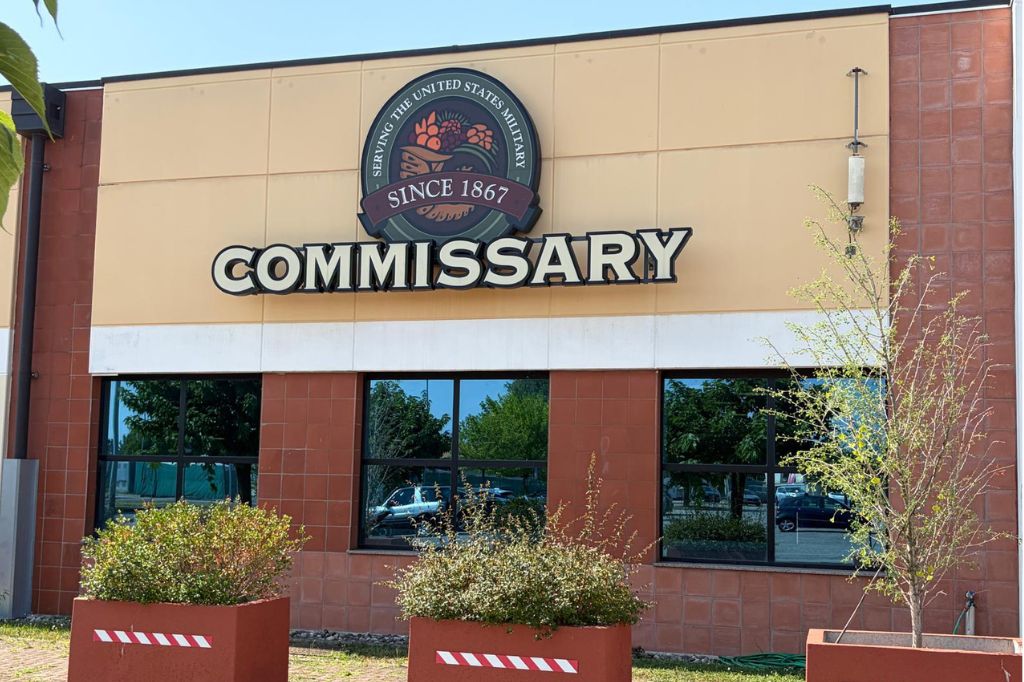
If you have children, they may attend the DOWEA schools, and if you have children in college on your orders, they qualify for funded travel to and from the U.S. during college breaks.
What financial benefits come with an overseas GS position?
In terms of monetary benefits, we received relocation expense, living quarters allowance (LQA) and post allowance, which is what many would call Cost of Living Allowance (COLA).
Relocation covered our personal flights, household goods movement, storage for things we did not ship, and POV shipment. One thing to keep in mind is that your relocation expenses for a civil service PCS move are now considered a taxable benefit thanks to the “Tax Cuts and Jobs Act of 2017”.
LQA is a tax-free allowance that covers the exact amount of your rent plus an estimate for utilities. The impact of LQA on your pay is significant. It means you are living here rent free if you stay under the limit. The rest of your base pay becomes disposable income.
This is why considering taking a job a grade or two below what you would accept in the States is not as big a financial burden as you might expect.
The only issue with LQA is that if you are already overseas and get hired locally, you are usually disqualified from receiving it as a local hire. The same applies if you are hired less than two years after returning from overseas as a government civilian.
If you are retiring from the military overseas, you can remain eligible for LQA, but you must make sure you don’t use any of your military PCS entitlement designed to return you to the States, whether that’s a plane ticket or shipping household goods.
Post allowance is a Cost-of-Living Allowance. It varies with the exchange rate, and we have seen it fluctuate greatly since we’ve been here.
Another benefit you receive as a government employee is “Return Agreement Travel (RAT)”. This is what you might call a civilian “Mid-Tour” leave where you and your family get fully funded travel back to your home of record once during your tour.
How long can a DoD civilian remain overseas?
An important point to touch on is the Overseas Tour Extension or OTEX rules.
When you take a DoD overseas job you are here on a three-year tour and may extend for two more years with chain of command approval for a total of five years. That’s supposed to be the limit.
The regulations do, however, allow your chain of command to grant additional extensions two years at a time. At this point it really depends upon the organization. I know organizations that stick to the five-year rule with no exceptions.
There are others that will usually grant extensions if supported by the supervisor and chain of command. If you don’t get an extension, you must return at the end of your tour and remain two years in the U.S. before returning overseas.
A side note on extensions is that DOWEA and Non-Appropriated Fund (NAF) employees are not subject to the 5-year limit. If you are on staff at the dependent school or have a part-time job signing out tools at the auto craft shop, you can stay overseas with SOFA status without having to apply for an extension as long as you maintain DOWEA/NAF employment.
Did you consider going the contractor route vs. GS? What are the pros and cons?
I worked as an independent contractor while we lived in the DC area before I went GS. The pro of having a lot of flexibility and control over your schedule as an independent contractor is offset by one very big con: If you aren’t working and billing hours, you aren’t making any money. As a GS employee or full-time industry contractor you get paid leave.
If you want to go full-time contract vs independent, there are plenty of contract jobs overseas. We have a large contract that supports us in SETAF-AF and many of the folks who work that contract have transitioned from active duty to a position with that company.
A big advantage is you can start work right away and avoid the 180-day waiting period after coming off active duty. The disadvantage is that if you want to transition from contract to the GS side while here, you now become a local hire and will not get LQA unless you return to the U.S. for a minimum of two years.
As for benefits, that depends on what the contract company negotiated. The big one is dependent school attendance. Most contractors I know were able to get space-available DOWEA school attendance written into their contract and get a stipend to pay the tuition or to pay tuition for an Italian school on the economy.
Tell us about health care. Do you get care on base?
This is the one area where benefits for civilian employees are very different from a uniformed service member, though it varies by location.
On base health care in Vicenza is limited to clinic level for everyone, both uniformed and civilian. There is no military hospital. Military personnel might get referred up to Landstuhl if a physician recommends it, but otherwise, definitive care for military and all health care for Department of the Army (DA) civilians and retirees is off base.

A DA Civilian who is not a military retiree will have one of the government affiliated health insurance plans. I get my health insurance as a military retiree through TRICARE. I pay up front by credit card and file for reimbursement. In theory retirees have access to space available care at the clinic but in my experience, that is limited to the pharmacy.
Related Reading: How TRICARE Works When You Live Overseas
One point that can become a major issue is that there are only limited translator services at the local emergency room. The Army will only provide translator services for the uniformed military. DA Civilians and contractors cannot use the emergency room translator services.
Can spouses work while living in Italy under SOFA?
A disadvantage of living under SOFA status is spouses are not permitted to work on the local Italian economy. SOFA also prohibits spouses from owning a home-based business or receiving any supplies for a business via APO post office box.
They may work remotely, which is something that changed for spouses in Italy in 2023. They can also hold a telework or remote job with a United States company or corporation.
So, other than that, spouse employment is limited to work on Post in a GS Civilian job, a NAF job or a DOWEA position. There are also a few paid positions available at the USO, the Thrift Shop, and even TRICARE has a few slots for spouses.
Contractors will often post job openings in the spouse social media groups. There is a very robust program at Army Community Services (ACS) for Spouse Employment, should a spouse wish to find a job on Post.
If you completely retire in Italy, what changes when you lose SOFA status?
If you completely retire overseas, your access to benefits varies by location. In Italy you get more access to benefits than in any place in Europe I am aware of: full PX and commissary with no taxes imposed and full MWR access. You can also get a retiree APO mailbox, though you are limited (per the Military Postal Service Procedures Manual) to sending and receiving 16-ounce items.
You give up all logistical support such as the fuel card, driver’s license, vehicle registration and support from the Housing office.
There is a provision in the rules that allows you to convert your NATO driver’s license to an Italian license before you lose SOFA status. It costs 270 euros but it’s a smart move, since getting an Italian license involves a lot of study, and the test is only given in Italian.
What are your longer-term plans? What will you do when you reach your time limit with your current position?
The chain of command has approved our request to stay two more years for a total of seven and I have an opportunity to stay for an additional three years after that under a special one-time program the Army is experimenting with. That would put us at a total of 10 years overseas.
We are still deciding what to do after that. We are not sure we would want to stay without SOFA status.
Once you retire, you must get a long term stay visa to stay beyond the 90-day Schengen area limit of a tourist visa. Even after getting the visa, staying longer than 183 days a year makes you an Italian tax resident and you must pay Italian taxes. Military retirement and disability are not taxed, but any investment income and your civil service pension is. We are still weighing the pros and cons of all this.
What advice would you give someone considering a longer-term life overseas after military retirement?
There is one final thing you should keep in the back of your mind. Things in the world can change rapidly. I got to thinking about this when we visited Berlin two years ago. Berlin once had a very large U.S. Army presence that is now completely gone.
If you are considering a long-term stay overseas as an expat because there is a U.S. military base nearby, ask yourself: would you be happy and able to manage all the challenges of living overseas if the U.S. base went away?
If you’re a veteran who wants to keep working while living overseas, there are a few ways to make it happen.
Working on a U.S. military base is one path, and as Chris discussed, GS positions aren’t the only option. This interview with a veteran in South Korea shares the perspective of a NAF employee.
If you have a specialized skill set, you may find opportunities with a U.S.-based or local company. Learn how one veteran landed a job at a private company in Germany.
Running your own business is another possibility. Read Q&As with entrepreneurial veterans living in Vietnam and France.
Before moving to another country, make sure you understand the practical and financial considerations. Download our free Moving Overseas Guide, which covers the key questions to ask before choosing where to live.
Chris and Melissa Reed are a retired military couple living in Vicenza, Italy, where Chris is a Department of the Army civilian with the Southern European Task Force, Africa. Chris was born in Germany, grew up as an Army Brat and graduated from West Point in 1986. He served a 30 year career in the Army as an Infantry Officer. Melissa was born in Washington, DC and spent many years working as a paralegal in seven different states. She and Chris met as Gulf War pen pals.