
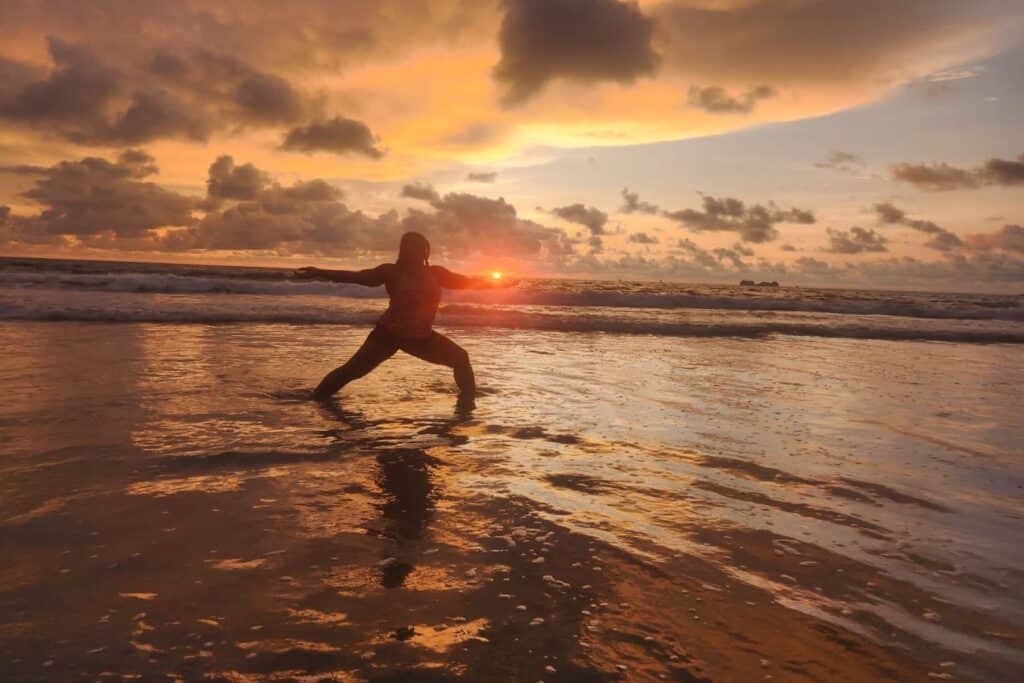
“I’m planting roots, I’m not a tourist.”
That’s how Army veteran Isah Kushma describes her decision to buy a home in Costa Rica and pursue legal residency instead of relying on border runs to extend tourist stays.
Isah retired from the Army in March 2022 in El Paso, Texas. After years of research and repeated visits to Costa Rica, she bought a home in Playas del Coco, a beach town in Guanacaste province, in February 2025.
For now, Isah splits her time between Costa Rica and Texas while completing the residency process. Once she receives her DIMEX, Costa Rica’s identification card for foreign residents, she plans to relocate permanently.
In this Q&A, part of our Veterans Living Overseas interview series, Isah shares how she researched Costa Rica, chose Guanacaste, and began making the country her full-time home.
Why did you decide to move overseas after military retirement, and how did you choose Costa Rica?
I wanted to move overseas because I had already lived in the United States for 40 plus years. It was time to try something new.
The traveling spirit has always been in my heart. My year of retirement became my year of exploration and travel. I began researching websites such as Poppin’ Smoke and International Living and browsing Facebook groups in search of places I could live after retirement.
My considerations:
- A place where I could live comfortably off my military pension.
- Ease of obtaining residency.
- Time required to travel to and from the U.S. (I am blessed with an aging mother).
- Healthcare system.
- Safety for solo travelers.
- Safety for Black people.
- Good mix of English speaking people.
- Heavy on fresh fruits and vegetables.
- Warm weather and lower elevation. (My arthritis does horribly in high elevations and in the cold.)
What led you to Guanacaste and Playas del Coco?
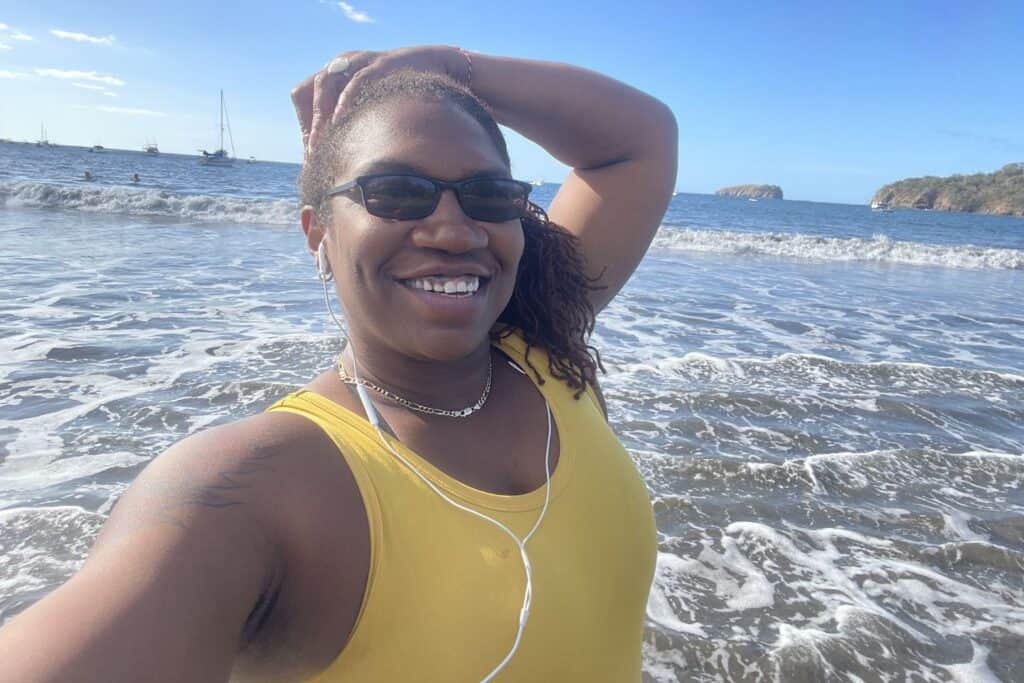
I first visited Costa Rica in 2022 with a retreat group and fell in love with the country. From there I began traveling around the country. I did an internship with theyogasanctuarycostarica.com and did a few house sits.
After I settled on the Guanacaste area, I returned three to four times per year during different seasons to check out the climate in real time and see what the vibe was like during both tourist season and off season. Each visit was 3 – 4 weeks.
After building a nice community base in the little fishing town of Playas del Coco (“El Coco”), I made the decision to purchase a home.
| Related Reading: Retiring in Manuel Antonio, Costa Rica
Anything potential home-buyers in Costa Rica should know?
When I purchased a home, there were not many lending options, so I paid cash. Now, some buyers get financing through a U.S.-based company that offers mortgage lending for properties in Costa Rica, but I’m unsure how that works.
As a buyer, the closing costs are about 3-5% (transfer tax, registry fees, legal and notary fees, professional service fees, etc.).
Another thing to be aware of in the process is the due diligence phase, which is when you get an inspector, get all the legal stuff worked out with the city, and submit your deposit of ‘good faith money.’ You only have about 10 calendar days to do all that.
Also, buyers must be mindful of both U.S. and Costa Rican holidays because they can affect your timelines with bank transfers.
Tell us about the process of obtaining your residence visa.
I’m obtaining a pensionado (retiree) visa. It requires proof of at least $1,000 per month in permanent pension or retirement income. It grants legal residency, the right to open bank accounts, access to the public healthcare system (“CAJA”), and recognition of a foreign driver’s license. Foreign-source income (like a U.S. pension) is not subject to local income tax.
I used a service called Melanin Tours to help with the process. Celeste, the owner, is based in Costa Rica and offers different packages based on how time-intensive her involvement will be.
By the time I met her, I was already locked in with a house and only needed visa assistance. The service cost $5K and all fees were covered. Celeste gave me a checklist of what to do and when, and she provided gift cards for anything that required payments (fees, postage, etc.).
I completed the process in the United States through virtual meetings. Things change often, but the broad stroke of everything was as follows:
- Provide proof of minimum retirement income.
- Fingerprints and background check in the U.S.
- Register with U.S. Department of State’s Smart Traveler Enrollment Program (STEP) program.
- Register with Costa Rica immigration.
- Translation and notary services (Melanin Tours took care of all this).
Once approved for the visa, I had to register with CAJA. I flew to San Jose for the Costa Rica fingerprints and document signing, and Celeste flew to Liberia (another city in Costa Rica) to take care of the healthcare registration.
Melanin Tours is very hands-on and met me at the embassy for notary appointments and a few other random situations that arose.
My process was fairly quick, even though I’m still awaiting the physical card. It took about 9-10 months. Some of my friends have been averaging 2-3 yrs. There were policy changes along the way; typical Costa Rica red tape that slows the process.
It’s not easy to apply for residency on your own anymore, especially if you don’t speak Spanish. Also, even if you do speak Spanish, you are not allowed to do your own Spanish translations; you have to use the apostille services and approved translators.
Note from Poppin’ Smoke: Residency requirements, fees, timelines, and tax rules can change. Use Isah’s experience as a starting point, and verify current requirements with official sources or a qualified professional before making decisions.
Some immigrants to Costa Rica choose to skip the red tape and do “border runs” instead. Did you consider that option?
Border runs (leaving the country every 6 months and re-entering to “re-set” a tourist visa) did not interest me, as I plan to live in Costa Rica permanently.
I am uninterested in taking advantage of loopholes. The tourist run is a huge loophole, and the tourist visa may change again. When I first started visiting, it was 3 months, now it is 6 months. There has been talk about requiring 90 days out of country before returning as the country tries to deter perpetual tourists.
I’m planting roots, I’m not a tourist. That’s why I purchased a house. Also, I may require healthcare, so I need to be part of the Costa Rican healthcare system.
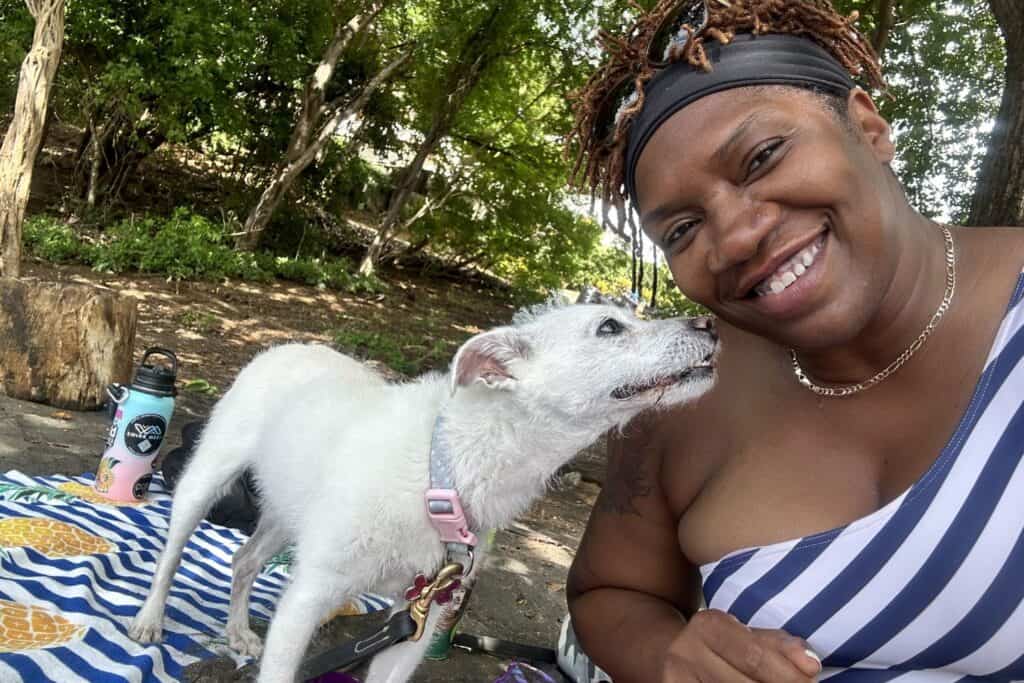
What is your experience with healthcare so far?
I receive my main healthcare from the VA. For big stuff I fly back to the U.S. I really like the El Paso VA.
Once my residency is complete, I’ll use the Costa Rican CAJA system for acute care or the VA Foreign Medical Program (FMP). With FMP, when an injury arises related to my claimed disabilities, the initial expense is paid out of pocket, then a claim is submitted to FMP for reimbursement.
I’ve used the local healthcare system three times, but the cost was so low I didn’t submit a claim to FMP. The juice wasn’t worth the squeeze. My emergency room visits were about $150 which included treatments, medications, and follow-up visit.
Do you speak Spanish? If not, is it difficult to navigate daily life?
When I first started looking at Costa Rica I spoke zero Spanish. It was difficult in the beginning before I had international cell phone coverage and could use the translate app a little more.
I explored a few spots that are not touristy, so the amount of English spoken was very slim. Communicating, even in the grocery store, got frustrating.
English is spoken more in touristy areas, but of course I wasn’t super interested in moving to a tourist town. For me, I want to learn the language for day-to-day living, but for business I need to be around English speakers.
I am still not fluent in Spanish but I’ve been working with Hannah of speakbetterspanish.com.
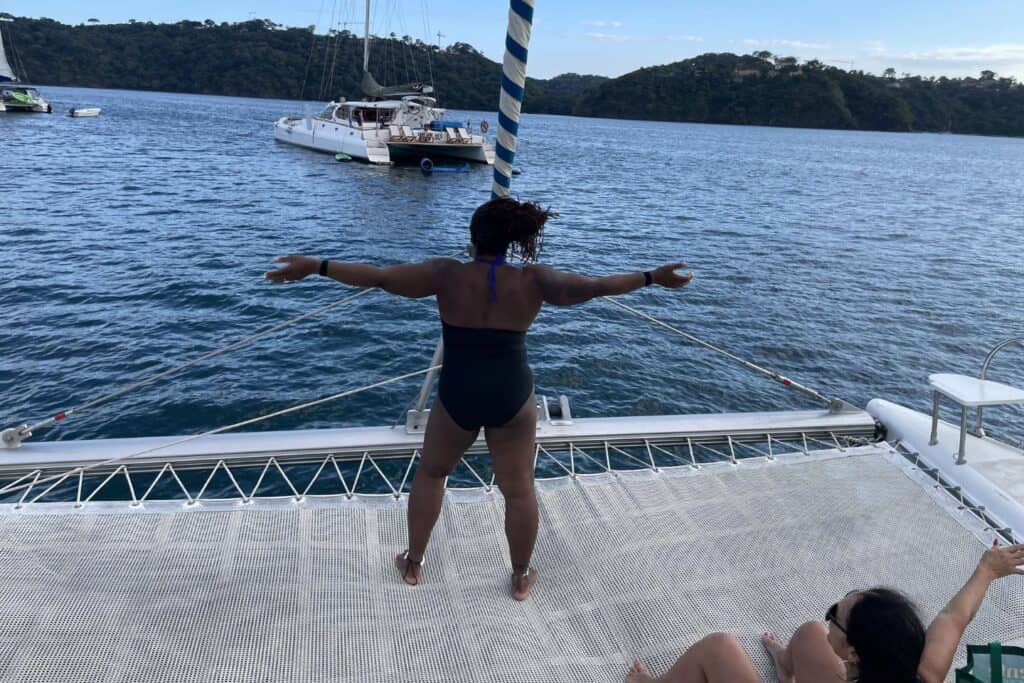
How does the cost of living compare to the U.S.?
Life in Guanacaste is comparable to El Paso, Texas. El Paso has a lower cost of living than most of Texas and other big states, but here is what I spend on average in Costa Rica.
- Breakfast with coffee: $12
- Fruit smoothie bowl: $12
- Dinner in a restaurant: $18-$25
- Groceries: about $300/month
- Internet & cable TV (grouped together): $50.
- Water & sewer $100
- Electricity: $30
- Pool and landscape maintenance: $110
What does a typical day look like for you in Costa Rica?
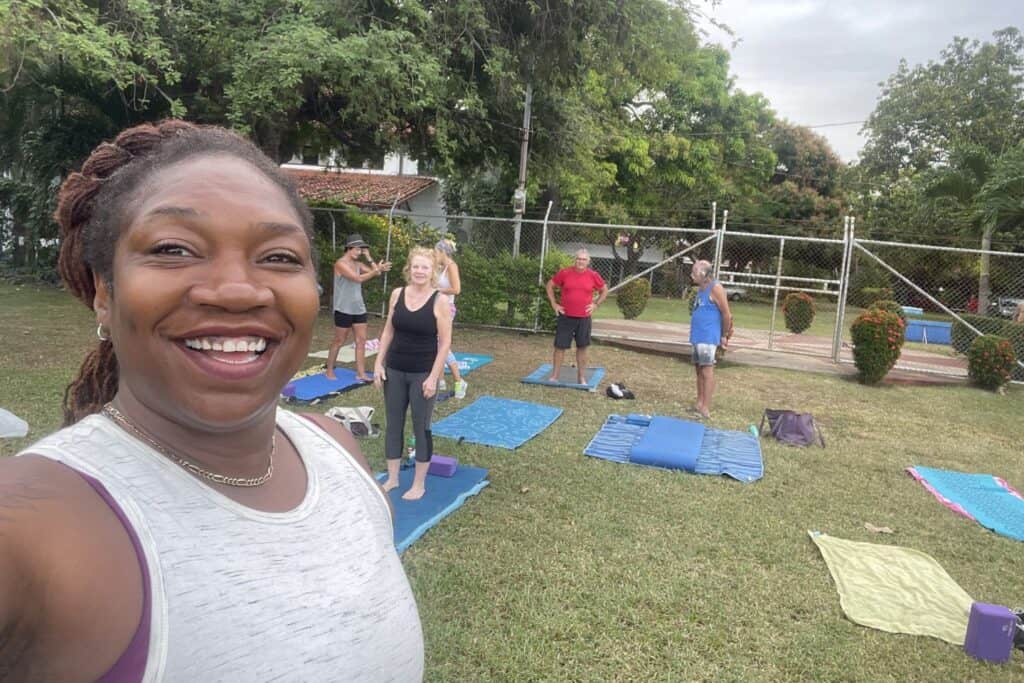
I go hiking at 05:15 as the sun comes up and sometimes end with a coffee breakfast. Depending on the day, I teach yoga (group and private sessions) or practice yoga.
I’ll visit with other friends here and there throughout the week. I read, play games, journal, talk on the phone with stateside friends, relax, and head to bed. It’s a simple, laid back life.
I don’t own a car. I walk or borrow a friend’s golf cart from time to time. And if I need to go to the larger town (Liberia) I’ll hop a ride with friends headed that way. When I travel across the country I don’t travel on public transportation due to my injuries. Instead I’ll bum a ride from friends or get a private taxi (of course I have a few contacts).
What has your experience been with safety in Costa Rica?
I have not had any issues. I have traveled there more than nine times by myself and know several single female travelers that either live there or have visited there. No one has shared issues with safety.
I think it is important to be just as vigilant in Costa Rica as any place in the world. If you walk around flaunting money or are irresponsible with how you spend your money, you become an easier target. When you are around tourist areas, it’s important to take your bags with you instead of leaving them on the beach. Also, have some discernment when you are alone.
Do you feel like you’re building a community in your town?
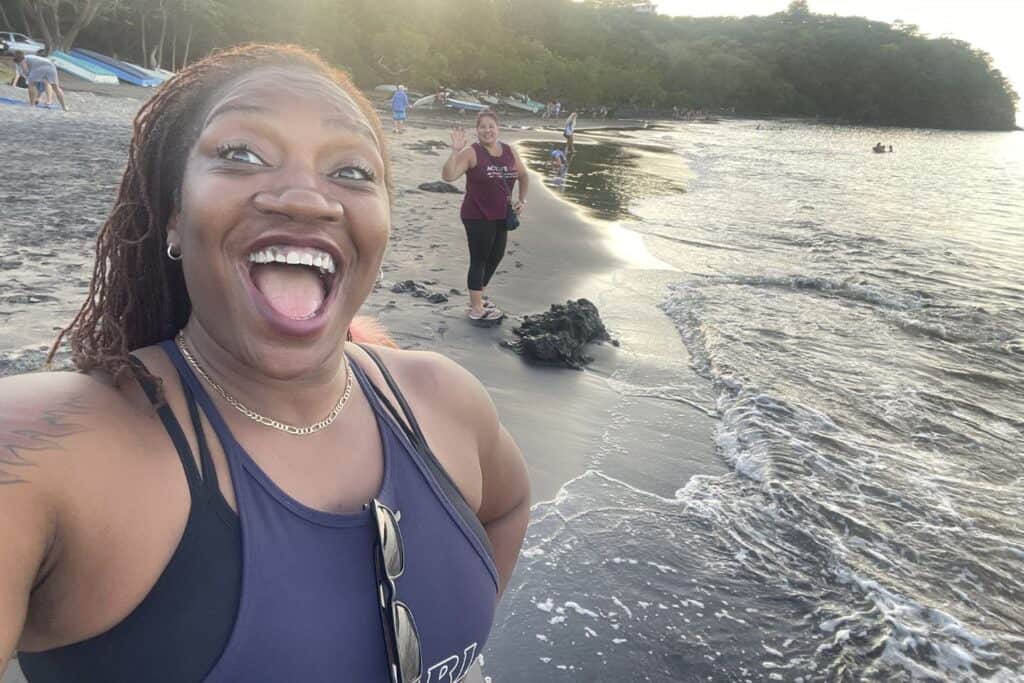
I am still in the early phases of being accepted. The better my Spanish gets, the more locals realize that I am there to integrate into their way of life instead of trying to bring my American way of life to them.
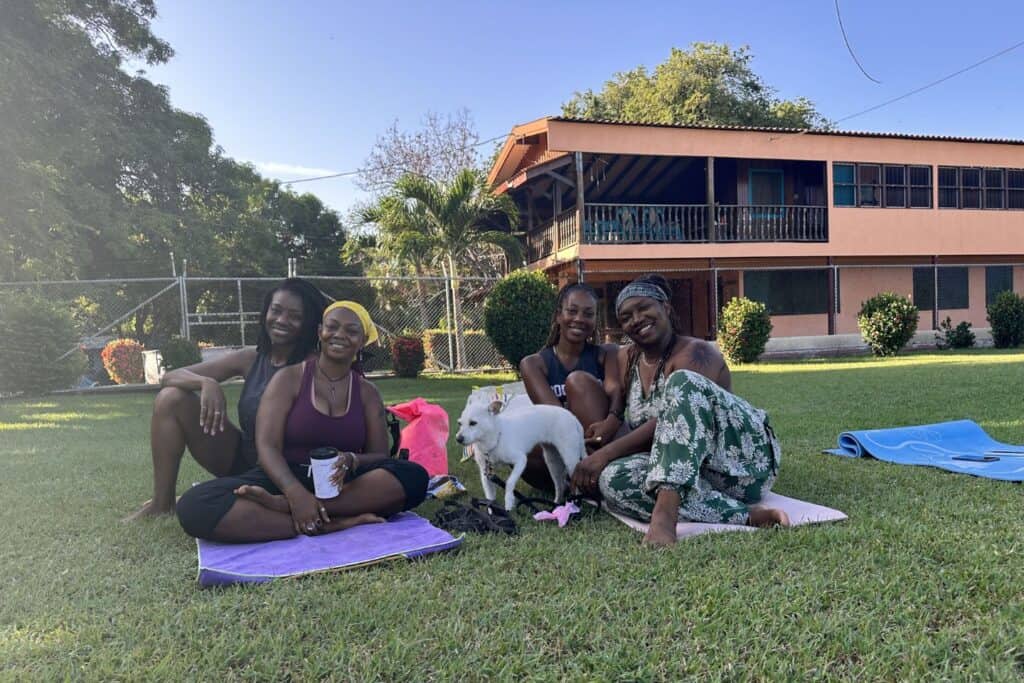
I have a mix of local friends and transplants from around the world.
What do you like about Costa Rica?
I like how much more nature I can consume. How little people are connected to their phones. How much slower-paced things are and that you have to be mindful of your purchases since there is no Amazon or Walmart minutes away.
Everyone is not driven by consumerism and in search of the biggest, best, fastest, newest thing. Also, Costa Ricans are more community-oriented and willing to help one another.
What are some of the challenges of building a life in Costa Rica?
When you ask for a simplified life, it’s important to understand what that entails. You have to pack patience, because government services are nothing like the U.S. Any given day, your water, electricity, or internet can go out without notice and no set time of when it will return.
Setting up services comes with lots of red tape and processes that make no sense. The residency process can become complicated and expensive if you don’t use a service. Even if you can translate Spanish, you have to get a registered translator and everything notarized, plus the rules change monthly throughout the process.
What advice would you give someone considering a move overseas, especially to Costa Rica?
I always recommend verifying what you’ve read online by visiting the country and talking to both a local resident and a transplant. And specifically for Costa Rica, visit different areas because there are many microclimates and cultures throughout the country.
What are your longer-term plans? Do you intend to live in Costa Rica for the foreseeable future?
Who knows what the future holds, but for now I am obtaining my temporary residency so I can stay for as long as I like.
I am retired and plan to keep it that way. I teach yoga online as an independent contractor for extra pocket change and to feed my spirit and strengthen my connection to the veteran community.
Isah’s story highlights one of the most important steps in any overseas move: spend real time in the country before making permanent decisions.
Rather than choosing Costa Rica based on one vacation, she explored different areas, visited during different seasons, and built a local community before buying a home. That kind of groundwork helps you move beyond the vacation version of a place and understand what daily life may actually look like.
If you’re considering a move overseas, start with research, but don’t stop there. Visit more than once, compare different regions, talk with both locals and other foreign residents, and look closely at healthcare, residency, transportation, safety, and cost of living before you commit.
For another perspective on life in Costa Rica, read this interview with a military retiree spouse who moved there full time after years of visits.
To help organize your research, download our free Moving Overseas Guide, which covers the key questions to ask before choosing where to live overseas.
Isah Kushma retired from the U.S. Army in 2022 after 25 years of service. Her Costa Rica home-buying process was featured on HGTV’s “World’s Bargain Dream Homes.” Connect with Isah on her website and Instagram.

Isah is me currently except I’m a newly retired Marine! I’ve been debating living in Costa Rica or Panama part-time but the majority of the time to get away from the craziness of the U.S.
I’ve only visited a couple of times but I have more research to do before I take the plunge. This interview came at a great time. It’s good to see someone like you do what you’ve wanted to do for years and be successful at it!
I really like your content. Thank you for posting it!