
On my first trip to Berlin, I had five full days to explore and still only scratched the surface. You could spend weeks there without running out of things to see and do.
I went in with a specific focus on history, mainly from WWII forward. What makes Berlin such a fascinating place to visit is how much of that history you can experience right where it happened. Even within that scope, there’s far more to see than you can cover in a single trip. If you’re trying to make the most of limited time, these are the places I’d prioritize.
Walking Tours
When I travel solo, I usually schedule a walking tour for my first morning to get myself moving. A friend had recommended the first tour below, and her feedback is what sparked my interest in visiting Berlin in the first place.
You can download self-guided tours to your phone, and many are free. But a knowledgeable local guide adds something you don’t get from a recording, especially through personal stories and how they present the history from their own perspective. That’s why I prefer guided tours when visiting a new city.
These are the two tours I took in Berlin. Both ran about three hours, and I would recommend each of them.
Berlin: Third Reich, Hitler, and WWII Walking Tour
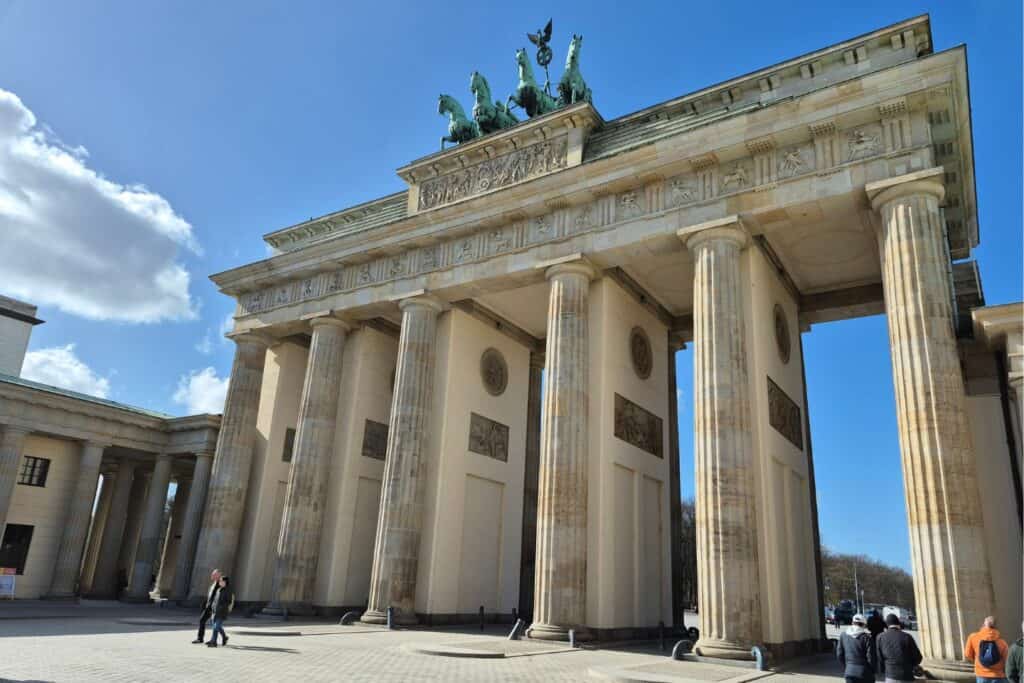
This tour explained how Hitler and the Third Reich came to power, right in the places where history unfolded. Major stops included the Brandenburg Gate, the Reichstag (Germany’s parliament), the Memorial to the Murdered Jews of Europe, and the site of Hitler’s underground bunker.
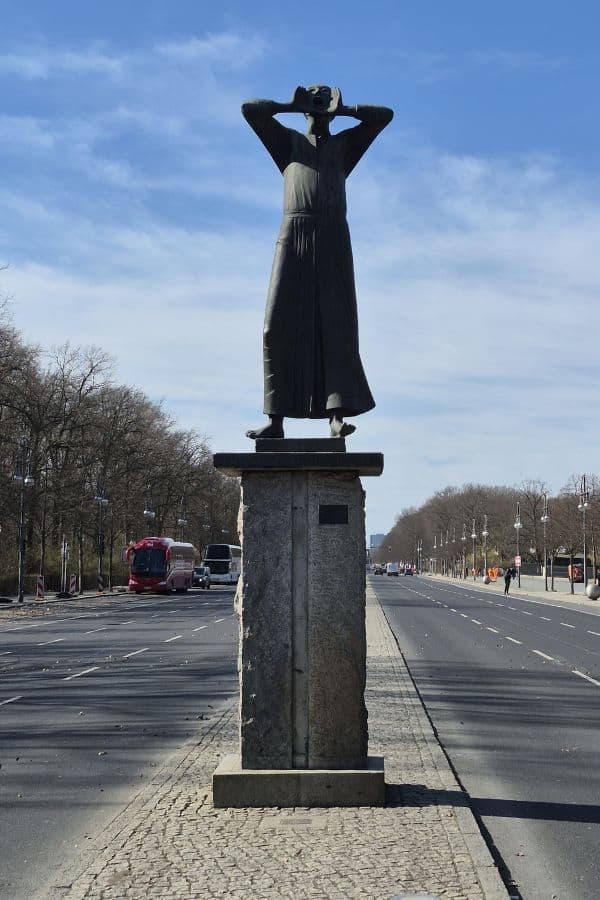
Our guide was a wealth of knowledge, also sharing interesting details and stories as we passed many lesser-known locations and monuments. We wrapped up the tour at Topography of Terror, a museum and documentation center located on the site of the former Gestapo headquarters.
View details and pricing for the Third Reich tour.
Cold War, Berlin Wall, Spies and the East Side Gallery
This tour combined walking with short rides on public transit. We started at the Palace of Tears (Tränenpalast), an old border crossing point connected to the Friedrichstrasse train station. From there, we took the train to Alexanderplatz, a large public square that was the heart of East Berlin.
Our guide, who grew up in West Germany, shared what he remembered about visiting Alexanderplatz as a child while meeting with family in East Berlin. Later, he learned the Stasi (East Germany’s secret police) had been monitoring his relatives and treated those visits as suspicious because they involved West Germans.
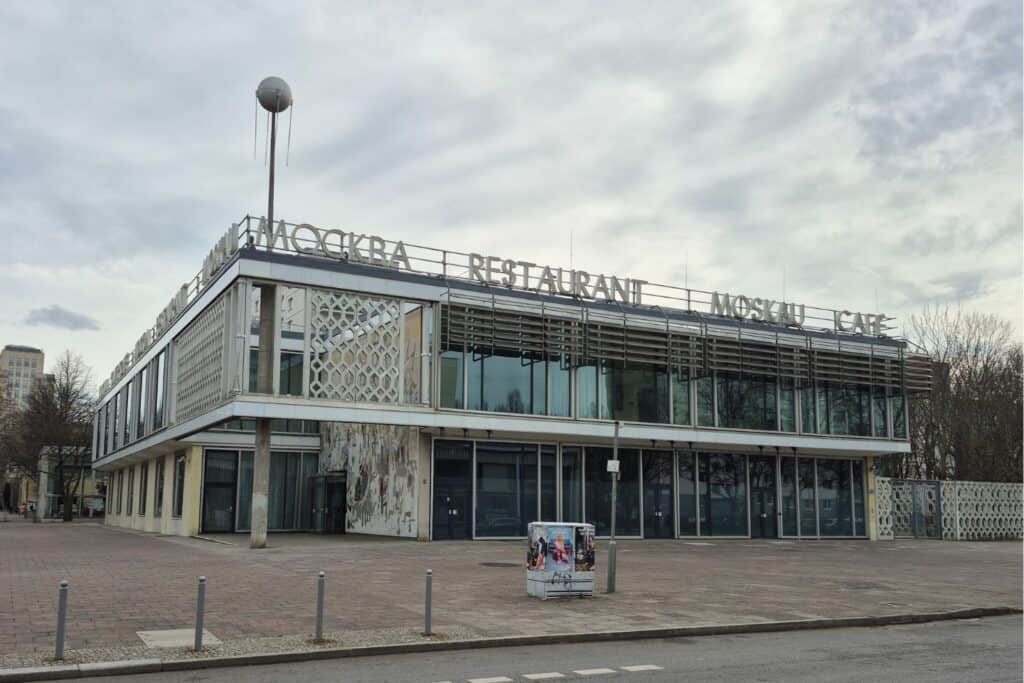
We walked down Karl-Marx-Allee (formerly Stalin Allee), one of the main boulevards through East Berlin, and saw the site of the 1953 worker’s uprising, which Soviet forces violently suppressed. The tour ended at the East Side Gallery, a long stretch of the Berlin wall, now decorated with murals.
View details and pricing for the Cold War tour.
More Historic Sites of Berlin
I returned to several of the tour stops on my own to have more time for reading and reflection. I also had a few places on my list that were not part of the tours.
Memorial to the Murdered Jews of Europe
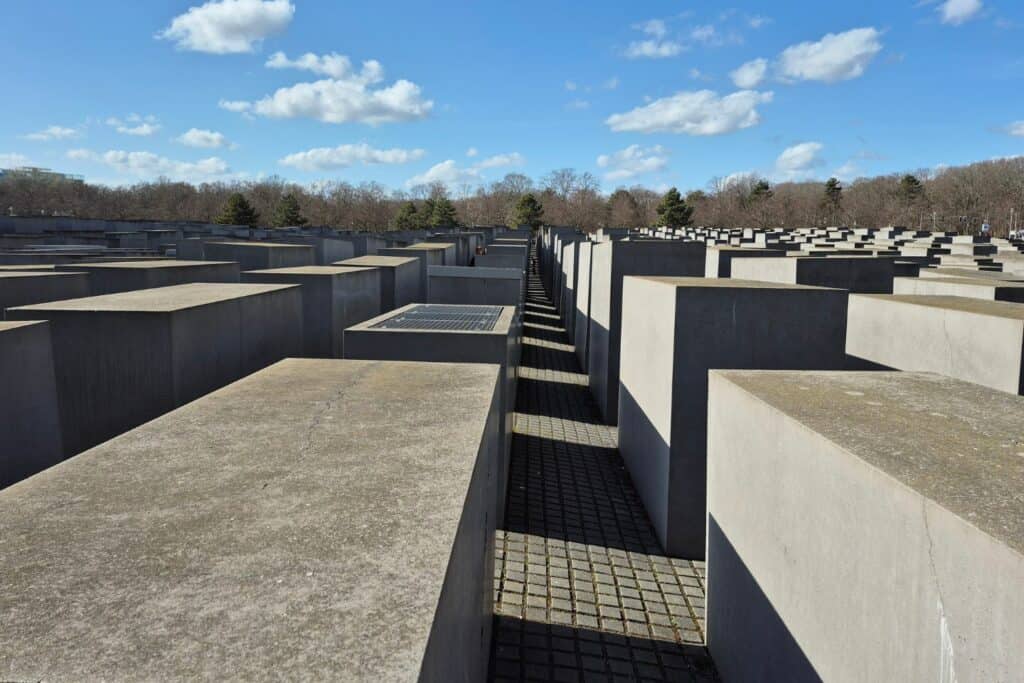
Designed by American architect Peter Eisenman and opened in 2005, this memorial consists of 2710 concrete blocks set in a grid of straight, narrow pathways, all the same length and width but varying in height. As you move deeper into the exhibit, the ground drops and the blocks rise, creating a disorienting, enclosed feeling.
The architect intentionally left the interpretation open, which makes the experience personal and, in many ways, more powerful.
There is a free exhibition beneath the monument, but it was closed for renovation during my visit.
Topography of Terror
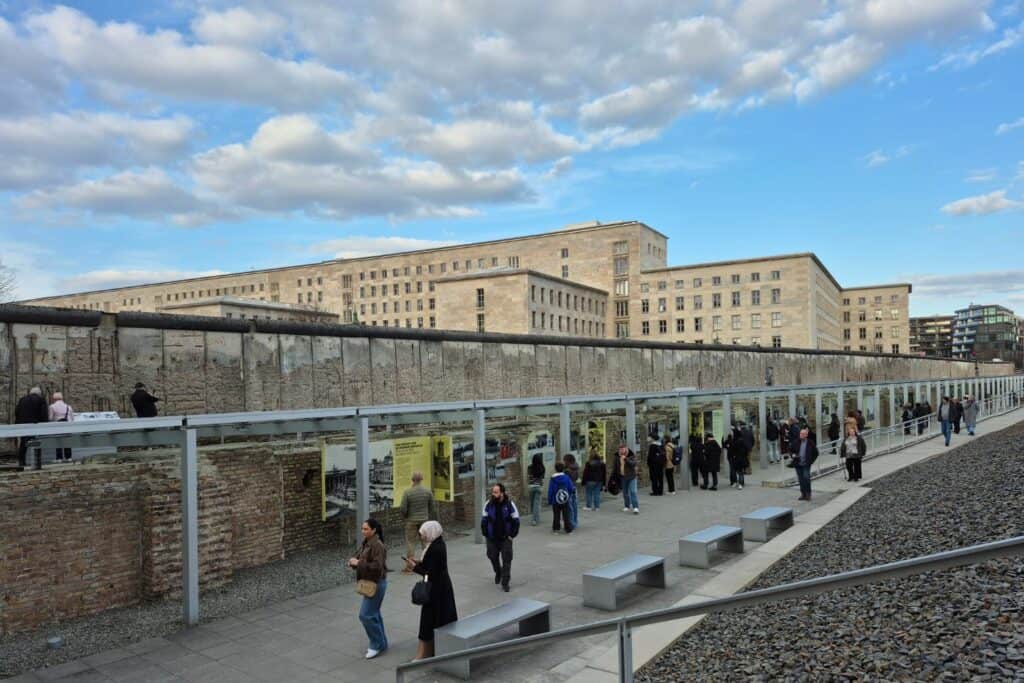
This free museum includes both indoor and outdoor exhibits. The outdoor exhibit is called “Berlin 1933–1945. Between Propaganda and Terror.” The photos, captions, and other media are displayed along the remains of the Gestapo headquarters’ basement walls.
The indoor exhibit, with the same name as the museum, is organized into five “chapters.” It covers different phases of the rise and fall of the Third Reich in Germany and the occupied territories.
The museum also has a special exhibit called “The Holocaust – What Did the Germans Know?” Unfortunately, it was not yet open when I visited, but it runs until 31 January 2027.
Topography of Terror is a lot to absorb, but it’s free (including the special exhibit) and open 7 days/week. Give yourself time or break it into two visits. Either way, it’s a must-see when visiting Berlin.
Palace of Tears (Tränenpalast)
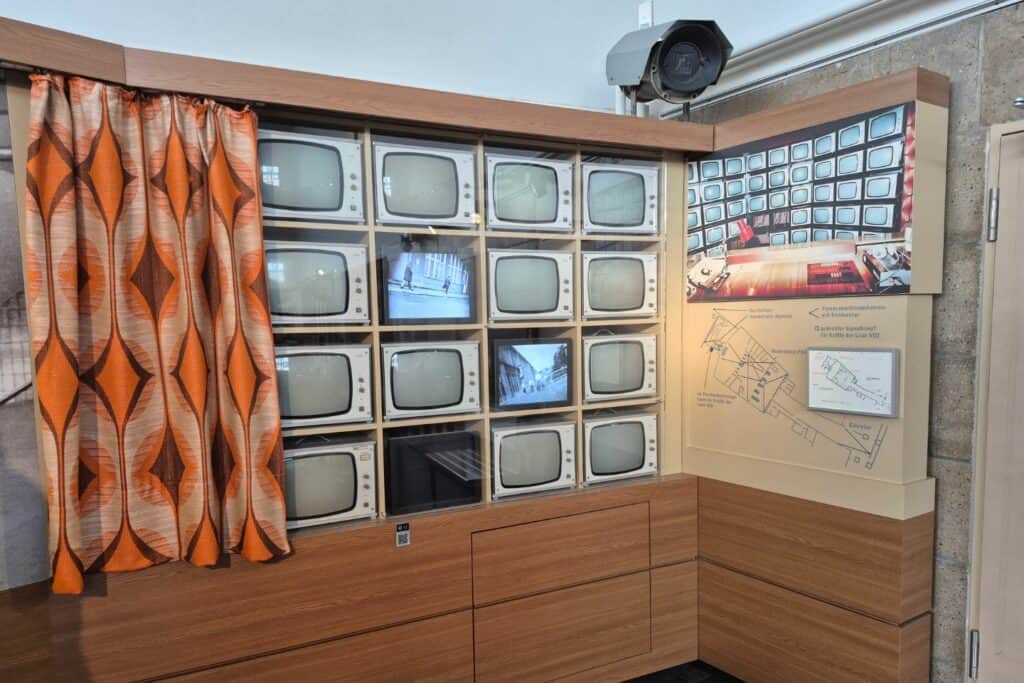
Another free museum, this former border crossing earned its name from the emotional farewells between East and West Berliners. The museum preserves major parts of the original facility, which was in operation from 1962 to 1989.
An especially interesting exhibit is in a small theater replaying media coverage during the Cold War. The discrepancy between how events were portrayed in East German vs West German media was fascinating and highlighted how the spin of propaganda can influence populations.
Berlin Wall Memorial
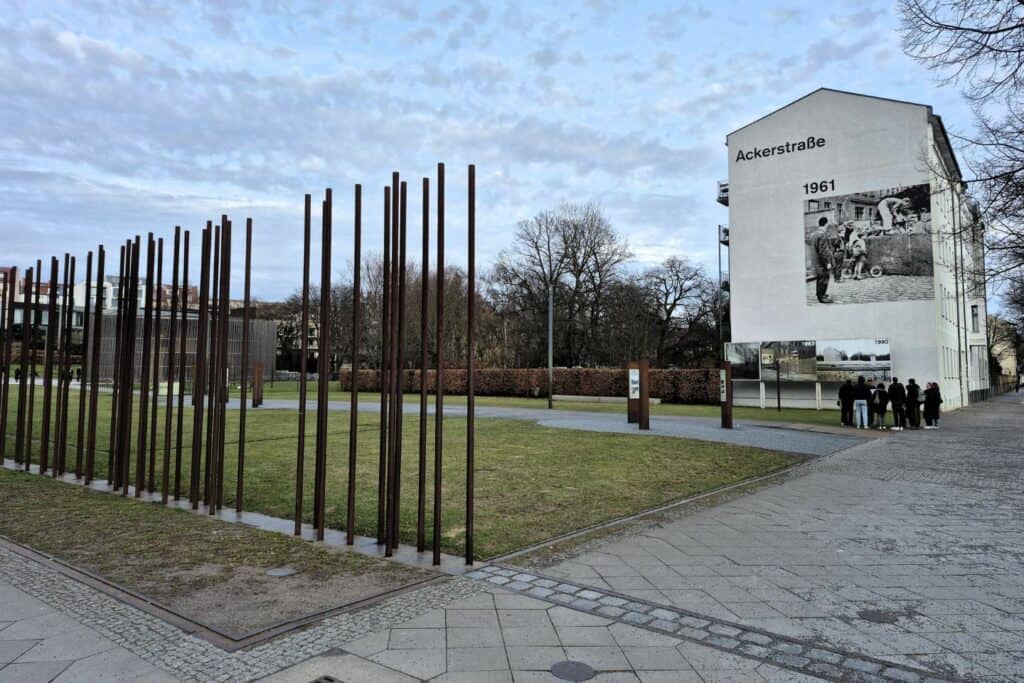
One of the most memorable parts of my visit, this site combines a memorial park with a visitor center and does an excellent job showing how the Berlin Wall actually looked and functioned.
The park begins above the Bernauer Strasse station. This street sat directly on the border between East and West Berlin, and the wall ran right in front of apartment buildings on the East Berlin side. It became the site of numerous escape attempts, from people leaping out of windows to trying to jump over barbed wire or dig tunnels.
As you walk along the memorial, you move through several city blocks punctuated with photos, written accounts, and short audio and video clips that explain what happened at specific points along the wall. It’s easy to follow, but also powerful, because you’re standing in the exact places where these events unfolded.
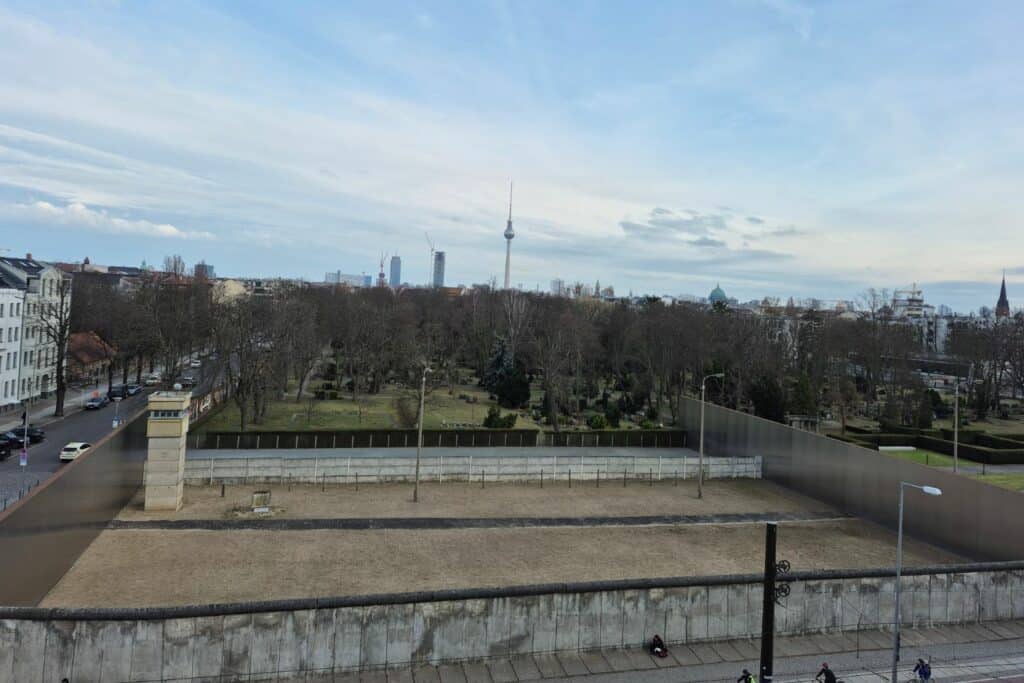
The visitor center adds more context with photos and artifacts, but the highlight is the observation tower. From there, you can see a preserved section of the wall system, including the inner and outer walls and the watchtower. Seeing the full layout from above makes it much easier to understand how heavily fortified it was.
If you have no plans to go to Berlin, the memorial’s website is excellent, and I encourage you to check it out.
Stasi Museum
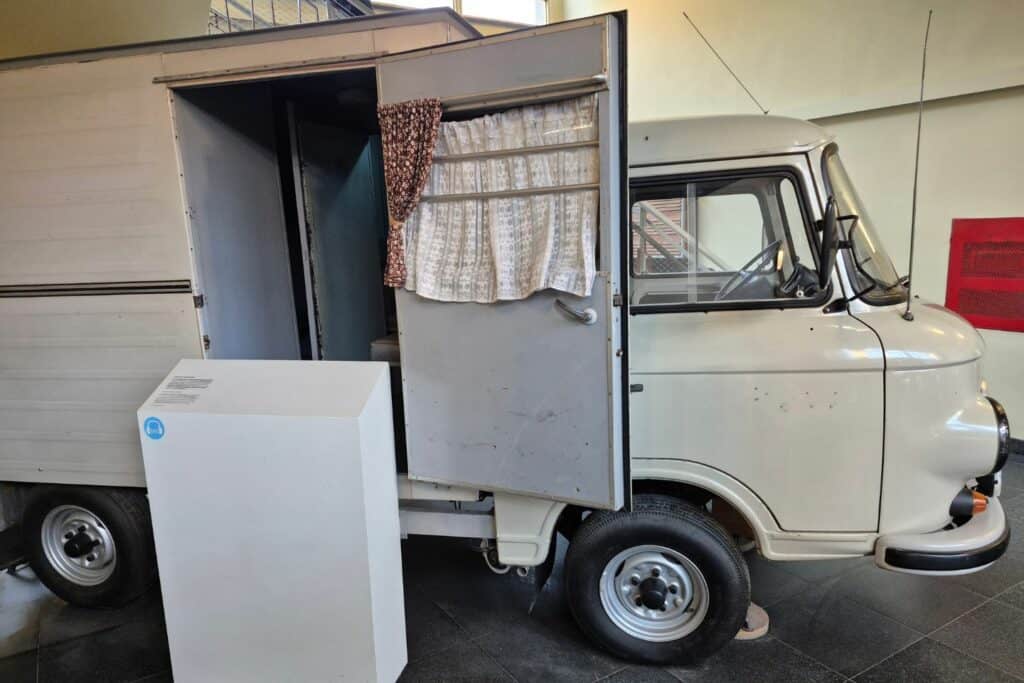
Located in the former headquarters of East Germany’s Ministry for State Security (“Stasi”), this museum explains how the Stasi operated and how extensively it monitored everyday life.
The exhibits focus on the systems and methods used to surveil, control, and influence the population. Some of the most interesting displays show the tools used to monitor individuals, including devices designed to collect information inside private homes. Seeing those up close makes you understand the true scope of the surveillance.
Also fascinating were the profiles highlighting individuals who worked with or for the Stasi. These help put faces to the system and show how ordinary citizens became part of it, whether willingly or under pressure.
Parts of the building, including the offices of Erich Mielke, the last Minister for State Security, remain largely as they were in 1989. The dated furniture and decor are mostly interesting as relics from the mid 20th century, but their preservation is remarkable considering that thousands of citizens stormed Stasi headquarters in January 1990 to stop destruction of files.
Admission was 12 euros when I visited, with an optional audio guide for 2 euros. They also offer guided tours in English on select days if you want a deeper explanation as you go.
Checkpoint Charlie
There’s not much left of this former Allied checkpoint, but it’s still a must-see while you’re in town!
Victory Column (Siegessäule)
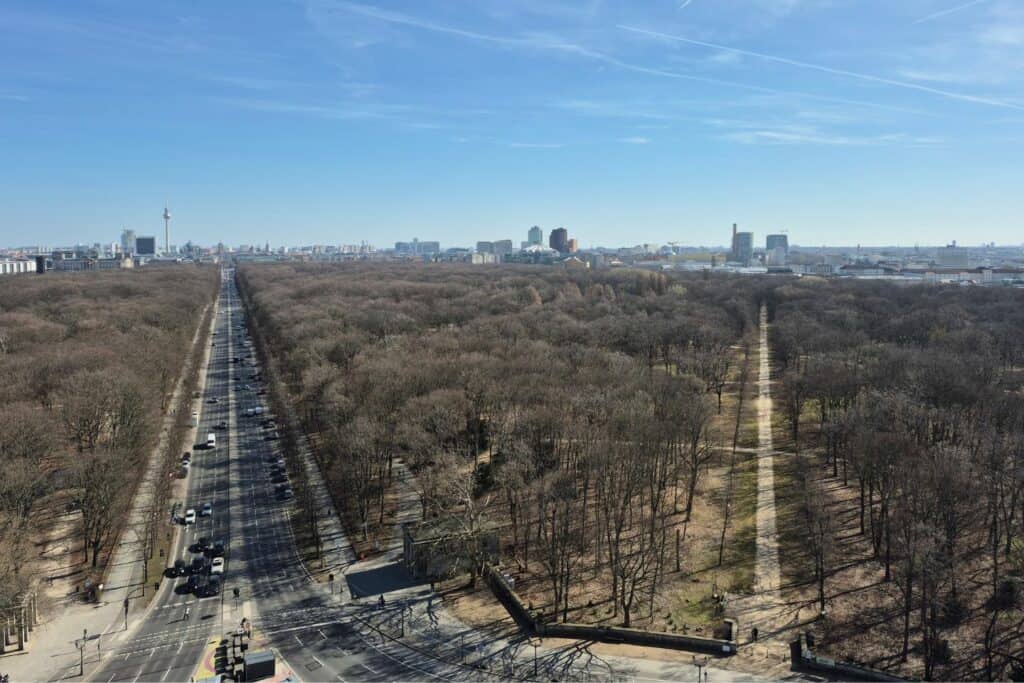
The Victory Column was built to commemorate Prussia’s victory in the Danish-Prussian War. Completed in 1873, the column includes a small museum at the base with architectural models of well-known structures from around the world.
The main draw, though, is the view. I chose this over the popular Reichstag dome because it doesn’t require advance reservations and offers an unobstructed panorama of the city.
Getting to the top takes some effort. The climb involves 285 steep, winding steps (no elevator if you get tired), so it’s not for everyone. If you’re up for it, the payoff is one of the best views in Berlin.
My Hotel in Berlin
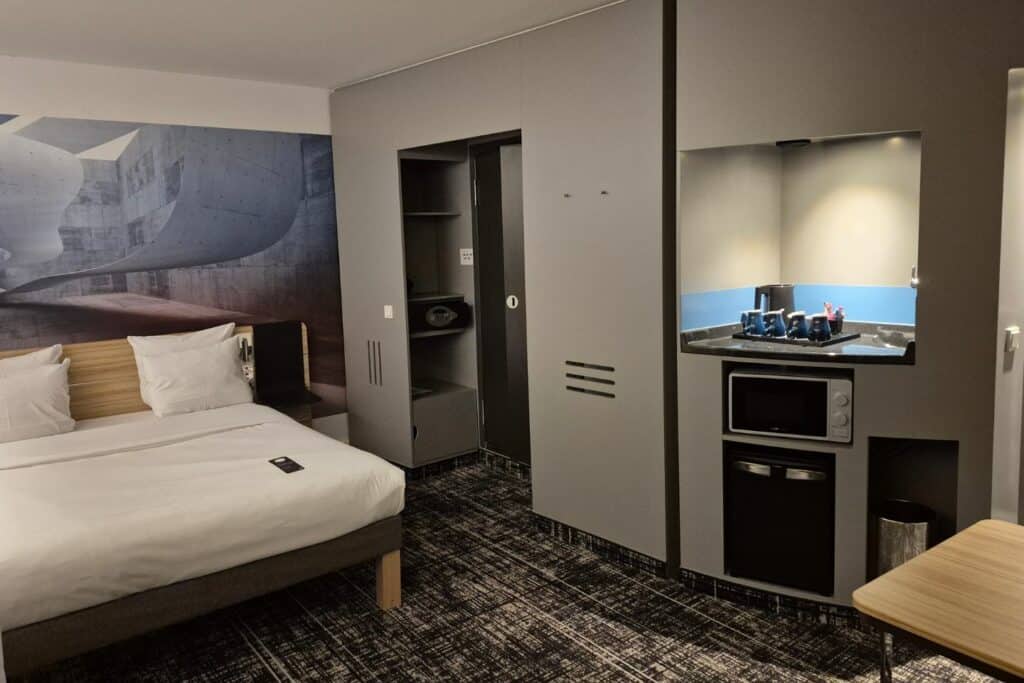
I stayed at the Novotel Suites Berlin City Potsdamer Platz, mainly for its proximity to the sites I planned to visit (and a pretty reasonable rate). Since I was staying six nights, I also wanted a space where I could comfortably eat some of my meals in the room.
The suite was spacious, with a king bed, sofa, table, and separate areas for the toilet and bath. It also had a mini fridge, microwave, and kettle. The hotel offered a buffet breakfast for 25 euros, but they also had coffee and drinks for sale separately in the lobby.
The room was quite comfortable for me as a solo traveler, but it could also work for up to two adults and two children, because the sofa converted into a bed.
Check rates for the Novotel Suites Berlin City.
What Did I Miss?
These were the main highlights of my visit, but even with five days focused mostly on WWII and Cold War history, I didn’t get to everything that caught my interest.
With more time, here are a few things I would have added:
- A Berliner Unterwelten tour to explore the underground bunkers and tunnels beneath the city.
- The Allied Museum, which covers the role of the Western Allies in Berlin during the Cold War.
- Tempelhofer Feld, the former airport turned public park, which played a key role during the Berlin Airlift.
Berlin went from barely on my radar to a place I’d like to spend more time exploring. It’s the kind of destination where you leave with as many ideas for your next visit as you checked off the first time. If you’re interested in WWII or Cold War history, put Berlin at the top of your list!
Love WWII history? Read these guides to visiting Hiroshima, Japan and Bastogne, Belgium.
Wow! Thank-you for sharing this. We were stationed in Berlin when the Wall fell. So many memories. I was able to tour the former Gestapo headquarters before they created the museum….hauntingly significant. Sad that Checkpoint Charlie museum is not much anymore. I remember it as fascinating (but very small place). I would LOVE to go back. To walk some of the places.
What a great experience! I was stationed in Germany from April 1981 to March 1983. During that time, some friends and I drove through East Germany to Berlin to attend a Billy Graham Crusade/Rally at the 1936 Olympic stadium. We went to Checkpoint Charlie and the Wall. And stood on a platform looking through binoculars at the East German soldiers looking through binoculars back at us! It was a very surreal experience! One that I’ll never forget. But I would be interested in going back after reading your notes. Thank you for all of your information!
Annette James